





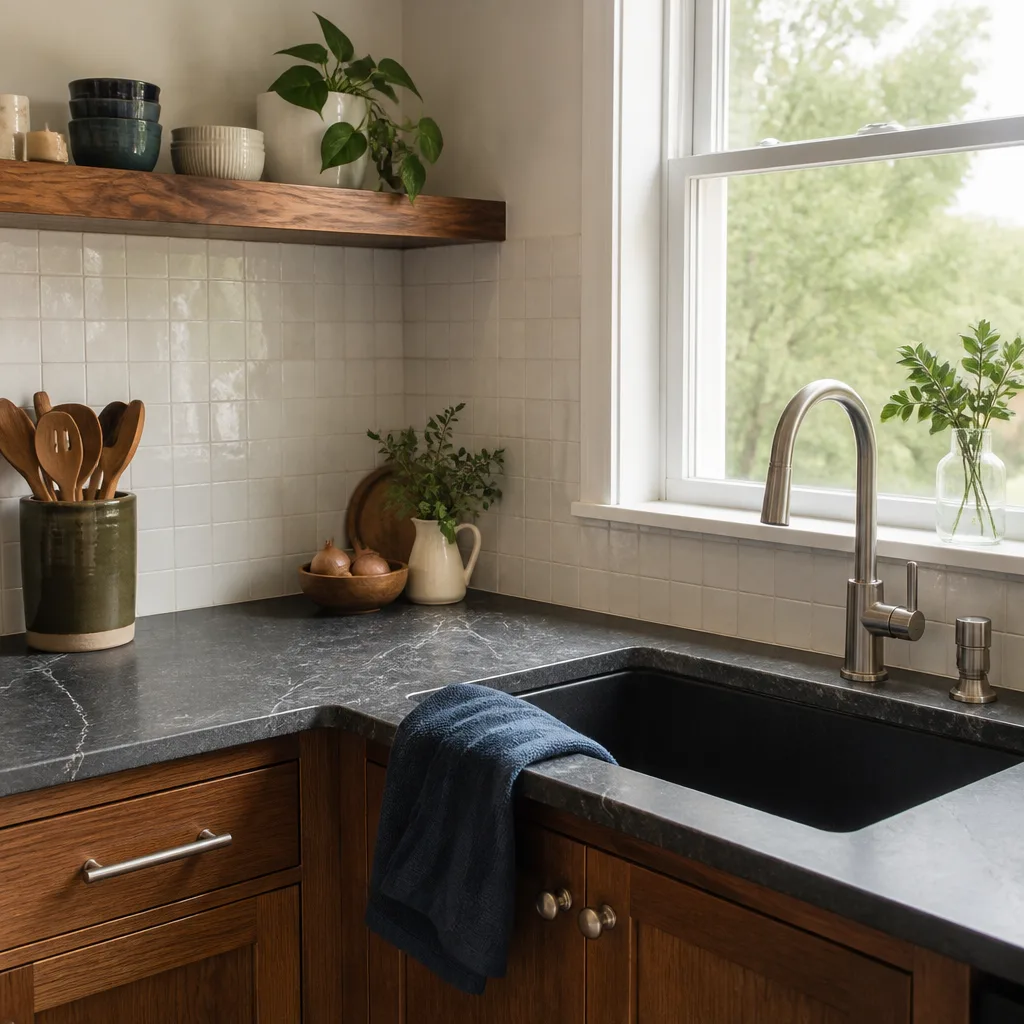



Free written scope consultation - allowances, timeline, and change-order rules on paper before a single trade is scheduled
Silestone Bathroom Remodeling: The San Francisco Owner’s Guide
Silestone bathroom remodeling in San Francisco typically runs $10,620 to $33,040 installed, depending on how much surface area you’re replacing and what’s underneath it. We stock Silestone-compatible materials for vanity tops, shower surrounds, and tub decks, and most bathroom surface work can be scheduled within two weeks of your written estimate. The usual discovery point: a homeowner notices a crack radiating from the sink cutout, or caulk lines at the Silestone-to-wall joint that keep splitting no matter how many times they’re re-caulked. That’s when the phone rings.
We’re an independent remodeling contractor, not a Silestone dealer or affiliate. What that means for you: we spec the material, we cut it, we install it, and we stand behind the whole job in writing. One contract, one warranty, no pointing fingers at a third party if something moves after close-out.
Which Silestone Models This Applies To

Silestone is a quartz surface, not a single product line, and that matters when you’re matching an existing bathroom. The material comes in three finishes: polished, suede (a matte texture), and volcano (a deeper matte with more grip). If your existing vanity top is suede and we quote a polished slab, the sheen won’t match even if the color name is identical. We always confirm finish before pricing.
Silestone slabs are manufactured in two thickness grades: 1.2 cm and 2 cm, with 3 cm available on select colors through certain Bay Area fabricators. Most San Francisco bathroom vanities built in the last fifteen years use 2 cm or 3 cm. Thin 1.2 cm tops were common in older condo builds where the vanity was framed like a cabinet top rather than a floating stone deck. Measure first: if your existing top is 1.2 cm, we’ll likely need to reinforce or rebuild the subtop before the new stone goes down, which adds $600 to $1,200 to the job.
For shower surrounds and tub decks, Silestone’s larger-format slabs reduce seam count compared to tile, but they require a dead-flat substrate. In San Francisco, where older homes shift with seasonal moisture, we routinely sister studs and shim before a slab surround goes up. Skipping that step is how you get a cracked Silestone panel eighteen months later.
OEM Silestone is Cosentino’s product, and it carries a 25-year manufacturer warranty on material defects. Aftermarket quartz that mimics Silestone colors exists, and it’s cheaper, but the color matching on aftermarket product is inconsistent lot to lot. For a bathroom, where you’re looking at the surface from eighteen inches away every morning, we spec OEM Silestone unless you tell us otherwise.
Styles & brands we work with







Signs Your Silestone Bathroom Remodeling Is Failing
- Cracks from the sink cutout or faucet holes. Quartz doesn’t flex like laminate. If the underlying subtop rotted or sagged, the stone carries stress at its weakest points, and those points are always the cutouts. The fix is a new subtop and a new top, not a patch.
- Caulk joints that keep splitting at the backsplash or wall line. The vanity or wall is moving. In San Francisco’s older wood-frame buildings, seasonal expansion and contraction can be enough to break a rigid caulk line every six months. We address the movement source before re-installing stone.
- Dull patches that won’t polish back. Quartz doesn’t need sealing like natural stone, but aggressive cleaners (anything with bleach or high-alkaline degreasers) can etch the resin binder over time. If you’ve got permanent haze on a Silestone top, refinishing is possible on polished finishes but not on suede or volcano.
- Water staining at the faucet base or sink rim. The silicone seal under the fixture has failed. Water gets between the stone and the subtop, and in a bathroom with daily use, that subtop rots faster than you’d think. We see this constantly in older Outer Sunset homes where fog-season humidity keeps everything damp.
- Seams in a shower surround that have shifted or opened. A properly installed quartz surround has seams under 1/16 inch with color-matched adhesive. If you can feel a seam with your fingernail, the panel behind it has moved. That’s a substrate failure, not a material failure.
See the difference
 Before
 After
After Before
 After
After Before
 After
AfterReplacement Cost & What’s Included

A full Silestone bathroom remodel in San Francisco, including vanity top, shower surround, and tub deck, ranges from $10,620 to $33,040. A standalone vanity top replacement with a standard 49-inch or 61-inch slab runs $2,360 to $7,670 installed, assuming the subtop is sound. A walk-in shower with Silestone surround panels starts at $5,310 and climbs with size, plumbing changes, and substrate corrections.
What drives the range: square footage of stone, slab thickness, whether we’re doing a straight swap or rebuilding the substrate, plumbing fixture relocation, and whether the home’s framing needs correction before stone goes up. Older San Francisco homes with settled floors almost always need some leveling work.
Every written estimate includes the material, fabrication, delivery, demolition, disposal, substrate prep, installation, and cleanup as separate line items. The price you sign is the price you pay. If we open the wall and find rot behind a shower surround, we stop, document it with photos, give you a change-order number in writing, and get your sign-off before proceeding. The Garrison Standard doesn’t allow surprise invoices.
DIY or Call Us?
Quartz is heavy. A 2 cm Silestone vanity top for a double-sink bathroom can weigh 300 pounds or more. The material itself isn’t dangerous to handle the way a garage spring is, but the combination of weight, tight bathroom spaces, and the precision required to cut around fixtures means DIY installs typically go wrong at the details: over-torqued faucet nuts that crack the stone, uneven support that leads to stress fractures within a year, or a seam that telegraphs through the surface because the two slabs weren’t perfectly aligned. If you’re re-caulking an intact joint, go ahead. If you’re replacing stone, call us.
If your Silestone top has failed and you want a straight answer on whether it’s repairable or needs a swap, call (831) 610-5598. We’ll tell you what we’d do if it were our bathroom, and we’ll put the price in writing before you commit to anything.
FAQs
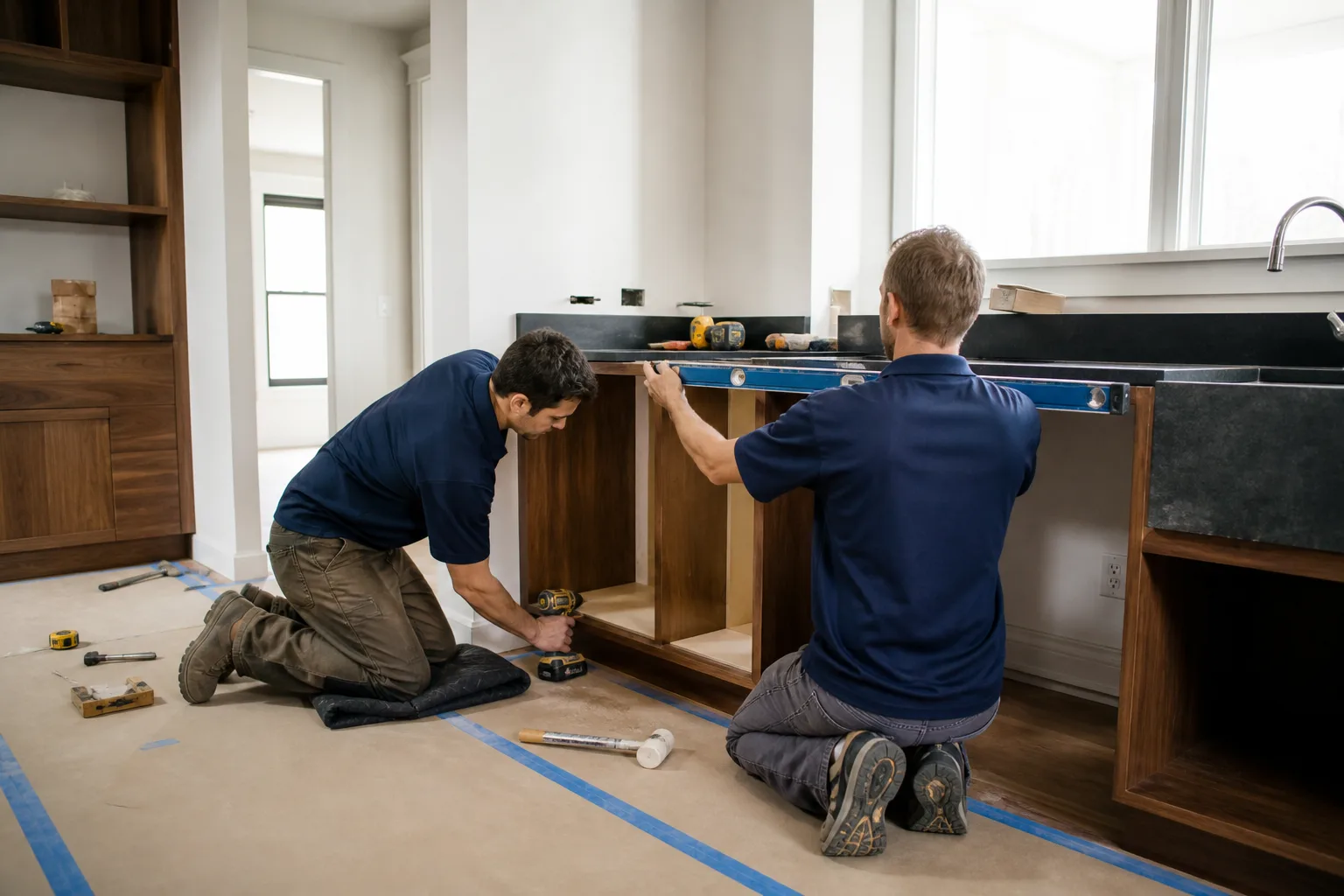
With proper installation, Silestone in a bathroom should last 20 years or more from a material standpoint, but the installation matters more than the slab. A correctly leveled subtop and properly sealed joints get you the full lifespan; a rushed install with an uneven substrate will crack the stone within a few years. Call (831) 610-5598 for an inspection if you’re unsure which situation you have.
Small chips and edge nicks can be filled by a stone fabricator, but a crack that runs through the slab from a cutout or edge is a structural failure, and any repair is temporary. The crack will continue to grow because the underlying cause, usually a sagging or rotted subtop, hasn’t been addressed. We’ll assess the subtop before we recommend either path.
From template to install, a vanity top replacement typically takes 7 to 10 days in San Francisco: template on day one, fabrication in about a week, installation in half a day. Shower surrounds and full bathroom remodels run longer depending on scope. We give you a timeline in the written estimate and hold to it.
We don’t warehouse full slabs; quartz requires fabrication, not shelf storage. We source Silestone directly through authorized Bay Area distributors and schedule fabrication with partner shops we’ve worked with for years. What we do stock: the installation materials, substrates, adhesives, and color-matched caulks needed for Silestone work, so we’re not running to a supply house mid-job. Call (831) 610-5598 and we’ll confirm current lead times for the color and finish you want.
Not without your written sign-off. We open walls on bathroom remodels, and San Francisco homes sometimes hide surprises, rotted studs behind a shower surround, failed plumbing, previous work that wasn’t code. If we find something that changes scope, we document it, price it, and get your approval before touching it. No change orders without a signature. Straight number, real scope, no surprises at close-out.
Written by Curtis Lane, Owner, Bradford Remodeling Co – San Francisco, CA at Bradford Remodeling Co San Francisco, serving San Francisco and nearby areas.


