







Free written scope consultation - allowances, timeline, and change-order rules on paper before a single trade is scheduled
Silestone Fence Installation: The San Francisco Owner’s Guide
Silestone fence installation in San Francisco typically runs $4,130 to $10,620 for a complete job, including materials, substrate prep, and labor. We carry Silestone-compatible fence components and install them with a written price before any work starts. The most common way owners discover this part has failed is a fence panel that sags, pulls loose at the anchor, or cracks along the mounting line after a wet winter against a retaining wall or planter edge.
Silestone is a quartz surface material. Used as a fence application, it means a vertical quartz panel system, typically low-height, that encloses a yard edge, a trash enclosure, a utility screen, or a side-yard boundary where a full masonry wall is not practical. The panels mount to a structural frame, and the failure is usually at the connection points, not the quartz itself. In San Francisco, the real enemy is the combination of fog-driven moisture, soil movement on hillside lots, and the freeze-thaw cycle in the Outer Sunset and Twin Peaks areas that works fasteners loose over a few seasons.
Which Silestone Models This Applies To

Silestone does not manufacture a product called a “fence.” What most homeowners mean is a vertical panel installation using Silestone slabs or cut-to-size pieces, set into a metal or treated-wood frame. The compatibility question is not about a Silestone model number, it is about slab thickness and edge profile. Standard residential Silestone slabs come in 2cm and 3cm thicknesses. A fence application usually uses 2cm material to keep the panel weight manageable on a vertical run.
Here is the compatibility gotcha most people miss. A Silestone panel that worked fine as a kitchen countertop is not automatically suited to exterior fence use. Exterior installations in San Francisco need to account for direct moisture exposure, and the frame anchoring must be engineered for wind load, especially on corner lots or any fence run over four feet tall. When we quote a Silestone fence installation, we specify the slab thickness, the frame material, the anchoring method, and the sealant used at every joint. That is the difference between a quote and a real scope document.
We are an independent service provider and are not affiliated with Silestone or its parent company. We work with Silestone material because it is a documented brand with consistent slab dimensions and a known fabrication profile, which makes the installation predictable.
Styles & brands we work with







Signs Your Silestone Fence Installation Is Failing
- Sagging or leaning panels. The frame anchors have pulled loose from the substrate, usually because the original install used fasteners too short for the soil or the mounting surface. This gets worse after any stretch of heavy rain that softens the ground around the posts.
- Cracks running from the mounting holes. The panel is under stress because the frame settled or shifted. Quartz does not flex, so the stress concentrates at the fastener point and fractures the material.
- Gaps opening at the seams between panels. The frame has moved out of square, or the original install did not leave an expansion allowance. Fog-season humidity cycles cause the frame to swell and contract, and a tight-fit install will eventually open up.
- White chalky residue along the bottom edge. This is mineral wicking from standing moisture against the panel base. It means water is not draining away from the bottom rail, and the substrate is holding water against the quartz.
- Fasteners that spin freely when you test them. The anchor points are stripped or corroded. In coastal San Francisco neighborhoods, salt air accelerates fastener corrosion, and a spinning fastener means the panel is no longer mechanically secured.
See the difference
 Before
 After
After Before
 After
After Before
 After
AfterReplacement Cost & What’s Included

A Silestone fence installation in San Francisco runs $4,130 to $10,620 as a complete installed price. The spread comes down to a few things: total linear footage, panel height, whether the existing frame can be reused or must be rebuilt, and access to the site. A tight side yard behind a row house where every panel has to be carried through the house is a different job than an open backyard with a wide gate.
Every quote includes the material, the frame or frame repair, the anchor hardware, sealant, and cleanup. You get one written price before any work starts. No numbers that move at the door. The work is covered by the 365-Day Done Right Promise, which means if the installation fails inside one year, we come back and correct it at no charge. That is in writing, every time.
DIY or Call Us?
You can safely check the fasteners, look for standing water at the panel base, and note whether the frame is plumb. That tells you what you are dealing with. What you should not do is remove a 2cm quartz panel yourself. A full 4-by-8 slab panel can weigh well over 150 pounds, and quartz is brittle at the edges. A panel that slips during removal will crack or take a chunk out of whatever it lands on, including the person holding it.
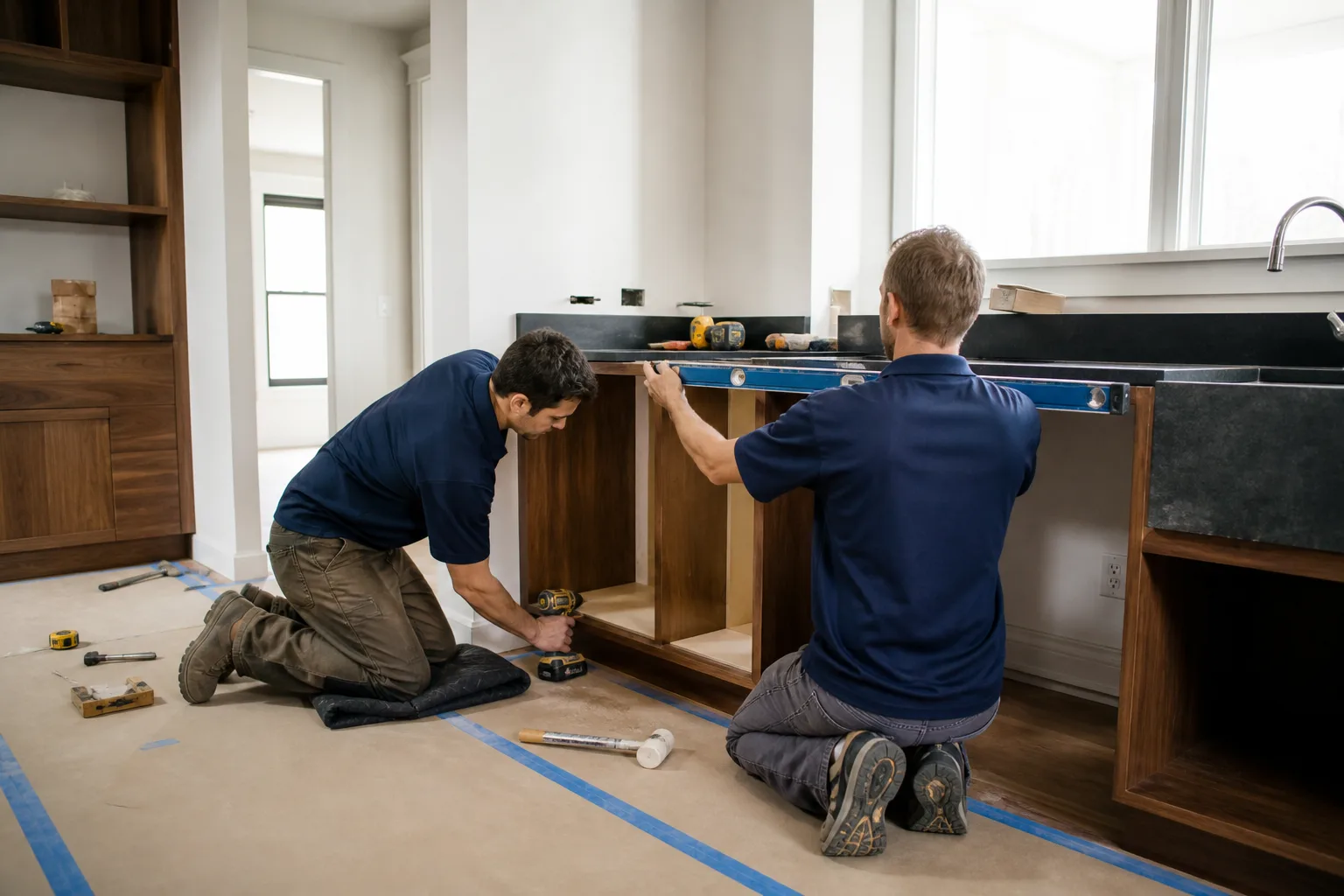
If the frame needs to be re-anchored or rebuilt, that is a structural job. San Francisco’s hillside lots mean the anchoring has to be done right or the whole run will move again next winter. We inspect the substrate, spec the right fasteners for the soil and the frame material, and set the panels so they drain properly. Call us at (831) 610-5598 and we will send someone out to look at it.
FAQs
With a properly anchored frame and correct drainage, a Silestone fence installation in San Francisco should last 15 to 20 years or more. The quartz itself does not degrade. What fails first is the frame and anchor system, especially in neighborhoods with heavy fog exposure and saturated soil. Call us at (831) 610-5598 if your fence is showing movement early, and we will check the anchoring before the panels crack.
We can repair the frame, re-anchor loose posts, and replace individual cracked panels, and we will tell you honestly if repair makes sense. If more than a third of the run is compromised or the frame is rusted through, replacement is usually cheaper than chasing it piece by piece. Either way, you get a written price before we start.
A typical San Francisco residential Silestone fence installation takes two to four working days, depending on the length of the run and whether the frame needs to be rebuilt. We give you a schedule in writing with the price, and cleanup happens the same day we finish.
We stock the anchor hardware, frame materials, and sealants for Silestone panel installations, and we order the slabs and cut-to-size pieces directly to spec for each job. We also work with KraftMaid, Cambria, and Kohler products for other parts of a remodel. You are not waiting on a guess; the material gets ordered against a written scope once you approve the price.
If your Silestone fence is sagging, cracked, or pulling loose at the anchors, the fix starts with an honest look at what is actually failing. Call (831) 610-5598 to schedule a free estimate. Straight number, real scope, no surprises at close-out.
Written by Curtis Lane, Owner, Bradford Remodeling Co – San Francisco, CA at Bradford Remodeling Co San Francisco, serving San Francisco and nearby areas.


