








Free written scope consultation - allowances, timeline, and change-order rules on paper before a single trade is scheduled
Caesarstone Home Additions & ADU: The San Francisco Owner’s Guide
Planning a home addition or ADU in San Francisco with Caesarstone surfaces already specified, or working around existing Caesarstone counters that need to survive the build, means getting the material handling and installation details right from the first cut. A full addition or ADU build in the city typically runs $53,100 to $153,400, with Caesarstone fabrication and installation adding $2,360 to $7,670 for countertop runs depending on slab size and edge profile.
Most homeowners don’t “discover” a Caesarstone problem mid-project. They discover it when a general contractor who doesn’t work with quartz regularly chips a corner during rough-in, sets a slab on an uneven substrate, or orders the wrong slab thickness for the planned overhang. Those mistakes show up as hairline cracks at the sink cutout, a counter that rocks on the cabinets, or a seam that opens up six months after close-out. By the time anyone notices, the tile backsplash is already up and the cabinet shims are buried. That’s the expensive version of the problem, and it’s the one we get called to fix.
Key takeaways:
- Caesarstone slabs come in 2 cm and 3 cm thicknesses; ADU and addition work in San Francisco nearly always calls for 3 cm because it survives overhang spans without additional plywood build-up.
- Installed Caesarstone pricing in San Francisco runs $2,360 to $7,670 per run, with fabrication, cutouts, and edge profiles driving the spread.
- Bradford Remodeling Co San Francisco is an independent contractor; we stock and install Caesarstone-compatible materials but we are not affiliated with Caesarstone.
- Every job gets a written scope and price before work starts, and the finished work carries our 365-Day Done Right Promise in writing.
Which Caesarstone Models This Applies To
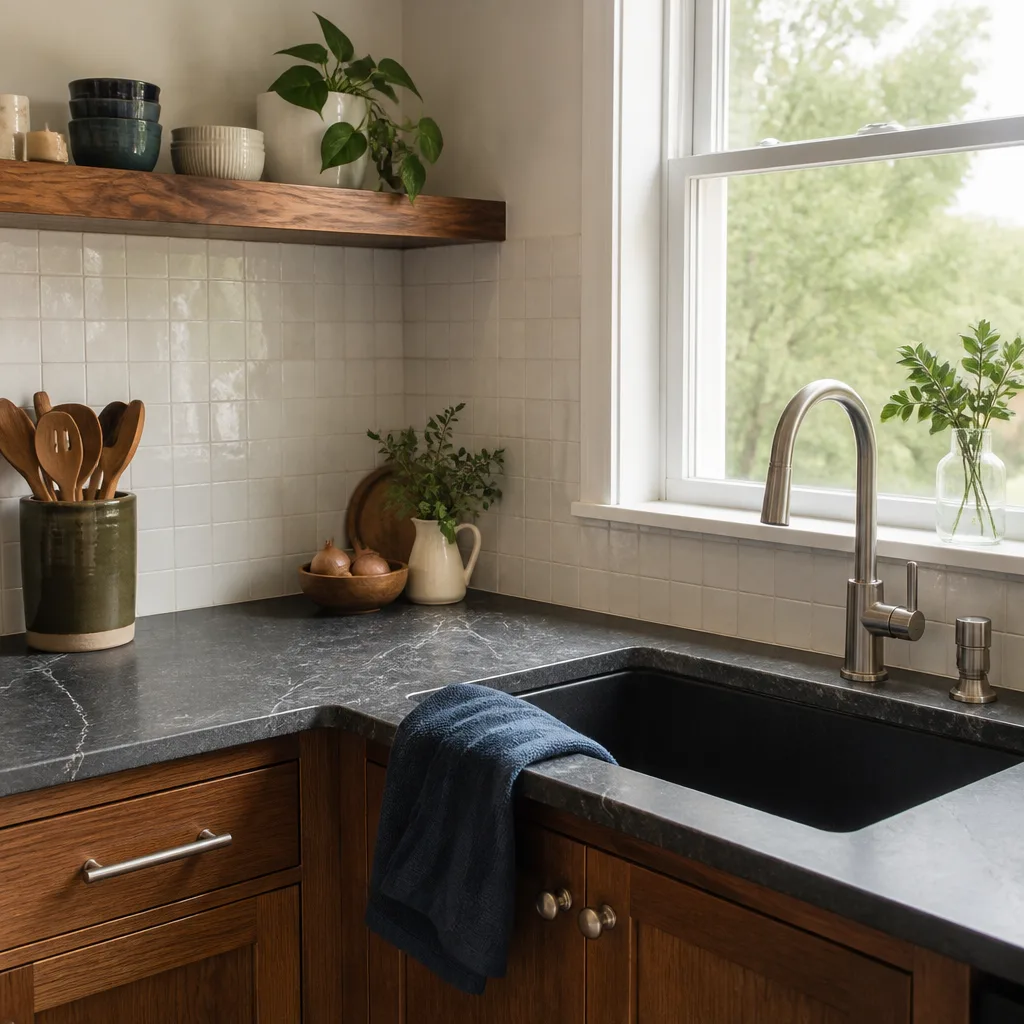
Caesarstone runs its product lines through numbered series families: the 5000 series (Classico), 4000 series (Supernatural), 5100 series (Sleek Concrete), and the outdoor-focused 4004 series, among others. The slab thickness, not the color number, is the compatibility variable that matters most on addition and ADU work in San Francisco. Standard interior slabs come in 2 cm and 3 cm. For kitchen islands, peninsula overhangs, and any run longer than eight feet without a supporting knee wall, we specify 3 cm every time. A 2 cm slab needs a plywood substrate under the entire field to prevent flex cracking; skip that and you’ll see a crack running from the sink cutout to the front edge within the first year. We’ve seen it in Outer Sunset additions where the original builder saved $400 on slab thickness and spent $4,000 fixing the result.
The OEM-vs-aftermarket question is simpler with Caesarstone than with plumbing or electrical parts. Caesarstone is the slab; there is no “aftermarket slab.” What you choose aftermarket are the fabrication details: the adhesive, the seam color, the sink mounting system, the edge profile tooling. We use polyester adhesive matched to the slab’s pigment lot, not generic epoxy, because Caesarstone’s resin binders bond cleaner with polyester chemistry. That’s a checkable compatibility fact most owners never ask about, and it’s the difference between an invisible seam and one that reads as a dark line across the counter six months in.
To verify what you have before we quote: look under the front lip of any exposed overhang for a laser-etched or ink-stamped Caesarstone mark. If it’s not visible, measure the slab edge thickness with a tape; 2 cm reads just over 3/4 inch, 3 cm reads just under 1 1/4 inch. That measurement alone tells us most of what we need for preliminary pricing. We also keep documentation on file for every Caesarstone color we install, so if you bought the home and don’t have a remnant or a receipt, bring a photo of the counter in daylight and we can usually match it from the slab lot records.
Styles & brands we work with







Signs Your Caesarstone Home Additions & ADU Is Failing
- Crack running from a sink or cooktop cutout toward the nearest edge. This is almost always a substrate problem: the cabinet deck wasn’t flat, the plywood build-up was skipped on a 2 cm slab, or the cutout corners were left too sharp. Quartz doesn’t flex; it cracks when the structure under it moves.
- Counter rocks or flexes when you press on the overhang. The cabinet boxes are out of level or the shims have compressed. San Francisco’s older wood-frame houses settle, and a counter installed to a settled frame can’t correct for new movement. The counter itself isn’t failing, but the support system is, and it will take the slab down eventually.
- Seam opens up or darkens along the joint line. Two causes. One: the slab halves shifted because the cabinets moved independently. Two: the installer used generic adhesive that oxidized and yellowed. Polyester adhesive matched to the pigment lot doesn’t do that. If the seam shows a dark line, the fix is a seam regrind and re-fill, not a slab replacement.
- Chipped edge on a corner that faces a walkway or doorway. Caesarstone is hard but not indestructible; a dropped drill or a ladder strike during a rough-in will take a chip out of a 90-degree corner. We can fill and shape minor chips, but anything larger than a nickel usually means a new edge profile cut across the full slab.
- Discoloration or hazing where hot items were set down. Quartz resin binders can scald at sustained temperatures above 300 degrees Fahrenheit. A hot pan straight off the cooktop leaves a white haze that no cleaner removes. For San Francisco kitchens where we know the owner cooks with cast iron, we recommend specifying Caesarstone’s 4004 outdoor-rated line for its higher heat tolerance, even inside.
See the difference
 Before
 After
After Before
 After
After Before
 After
AfterReplacement Cost & What’s Included

For a Caesarstone countertop replacement or new installation as part of an addition or ADU in San Francisco, expect $2,360 to $7,670 based on slab area. Small bathroom vanity runs and no-cookout areas sit at the low end. A full kitchen with island, undermount sink cutout, cooktop cutout, and a waterfall edge sits at the top. Slab thickness, edge profile complexity, and the number of seams drive the spread more than the color choice.
| Scope | San Francisco Price Range |
|---|---|
| Caesarstone countertop replacement (single run, no island) | $2,360 – $4,720 |
| Caesarstone kitchen countertop package with island | $4,720 – $7,670 |
| Full ADU build including Caesarstone countertops | $106,200 – $259,600 |
| Home addition build including Caesarstone surfaces | $53,100 – $153,400 |
Every quote from Bradford Remodeling Co San Francisco is a written line-item price before any work starts. The countertop line includes slab material, fabrication, cutouts, edge profile, adhesive, seam work, installation, and haul-away of the old top if we’re replacing. There are no numbers that move at the door. The Garrison Standard is exactly that: a documented scope, a documented price, and a documented correction process if anything falls short. Every completed project carries our 365-Day Done Right Promise, a written guarantee on the full year of workmanship. If a seam opens or a crack develops because of our installation, we come back and correct it at no charge. That guarantee is in writing and it goes home with you at close-out.
DIY or Call Us?
A Caesarstone slab is not dangerous to handle the way a garage door spring is. You won’t get hurt lifting a countertop. What you will do is spend $700 to $1,200 on a slab, tool rental, and adhesives, then live with chip marks at the cutouts, a seam you can see from across the room, and no warranty on any of it. The safe DIY work here is documentation: photograph your existing slab, measure the thickness, note the color name if you have the original paperwork, and map out the cutouts. That’s genuinely useful when you call us, because it lets us give you a preliminary number over the phone.
The work you shouldn’t attempt is cutting, seaming, or setting a quartz slab yourself. Fabrication requires a wet saw with a diamond blade and a router with proper edge tooling. Seam matching is a skill that takes a fabricator years to get right. And a cracked slab from a bad set doesn’t get covered by anyone’s warranty, including Caesarstone’s. If the counter is part of a larger addition or ADU build, the risk compounds: we’ve repaired slabs where a homeowner set their own counters to save money two weeks before a backsplash tile install, and the eventual fix required pulling tile, re-leveling cabinets, and resetting the slab. Call us at (831) 610-5598 before you make a decision. We’ll tell you straight whether your specific situation is worth a pro or whether a chip fill is all you need.
FAQs
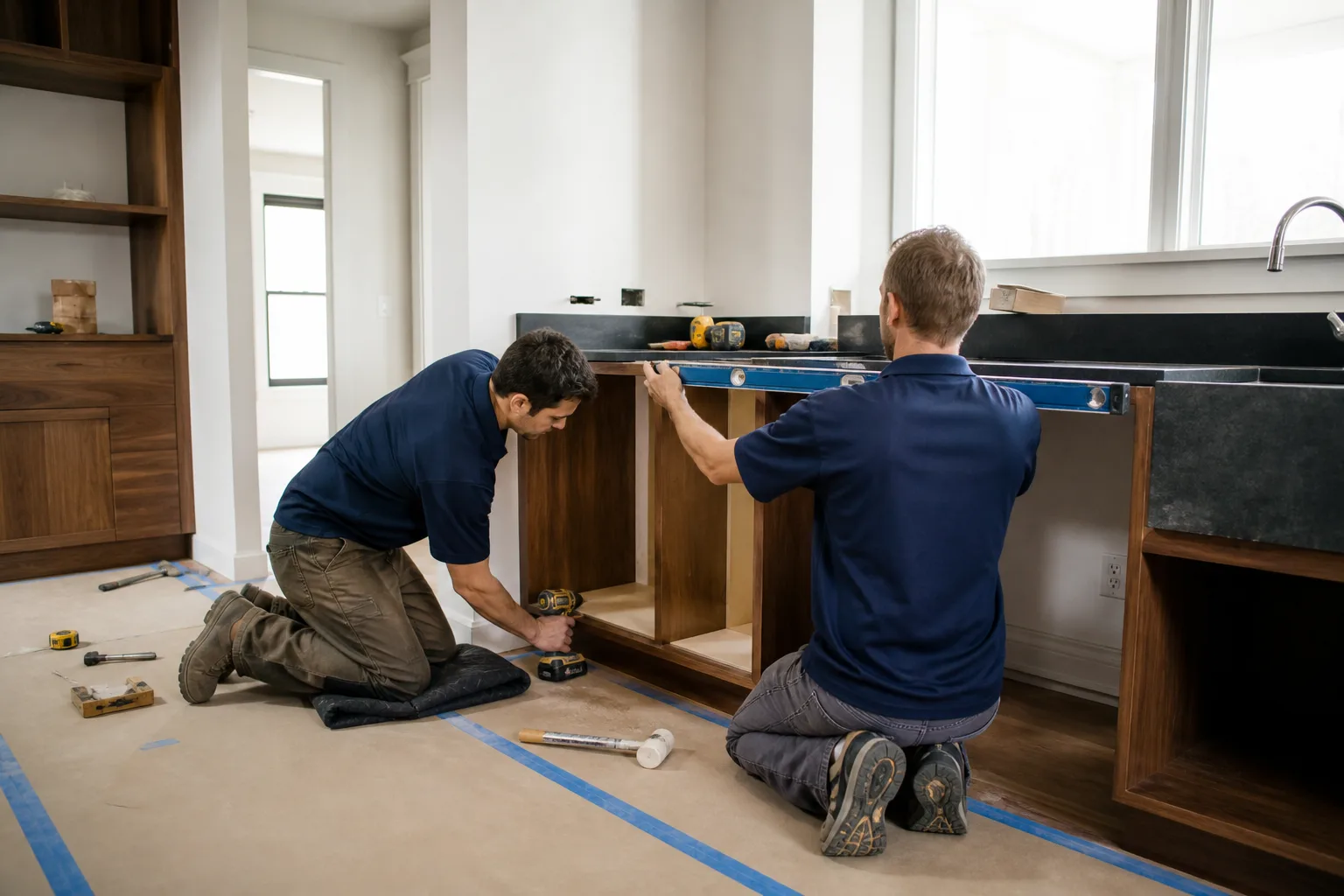
A properly set Caesarstone slab in San Francisco’s climate will last 20 to 25 years with normal use; the quartz itself doesn’t degrade from fog moisture or temperature swings the way wood or laminate does. The failure point is almost never the slab; it’s the substrate, the adhesive, or an impact that exceeds the material’s limits. If the underlayment is flat and the seams are right, you’ll replace cabinets before you replace Caesarstone.
Hairline cracks under two inches can often be filled and color-matched if the structural cause is corrected first, but any crack running through a cutout or across a seam means replacement, because stress cracks propagate through the resin binder. The honest rule: if the crack is caused by bad support, fixing the crack without fixing the support just moves the crack. Call (831) 610-5598 and we’ll tell you which situation you have.
A straightforward replacement, single run, no island, takes one day from template to set if the cabinets are already level; a full kitchen with island and slab fabrication runs three to five days from template to final set, because fabrication happens off-site in a wet shop. We pull permits when the addition or ADU scope requires them, and the permit process in San Francisco adds one to three weeks depending on the review queue.
We don’t keep slabs on a truck, because Caesarstone colors are ordered by pigmented lot and a slab left in a vehicle will bow from temperature swings before it’s ever set. What we do keep on hand is the installation gear: polyester adhesives matched to the last six Caesarstone lot families we’ve installed, seam-setting tools, and edge profile bits for the profiles we cut most in San Francisco kitchens. Slab delivery is coordinated from a local distributor with a two to five day lead time, and we handle pickup and transport so you’re never driving a 400-pound quartz slab across the Bay Bridge yourself.
If you’re looking for a straight number on Caesarstone work in San Francisco, call (831) 610-5598. We’ll ask for your slab thickness, roughly square footage, and whether it’s a replacement or part of a larger addition or ADU build. You get a written price before any work starts. Straight number, real scope, no surprises at close-out.
Written by Curtis Lane, Owner, Bradford Remodeling Co – San Francisco, CA at Bradford Remodeling Co San Francisco, serving San Francisco and nearby areas.


