






Free written scope consultation - allowances, timeline, and change-order rules on paper before a single trade is scheduled
Unilock Bathroom Remodeling: The San Francisco Owner’s Guide
A full Unilock bathroom remodel in San Francisco typically runs $10,620 to $33,040 installed. That figure covers demolition, substrate prep, waterproofing, tile or paver installation, fixture setting, and finish work, all priced in writing before we start. Most homeowners discover a problem not through a sudden failure, but through slow movement: a paver or tile that rocks underfoot, grout that crumbles in the corners, or a damp smell that never quite clears after a shower.
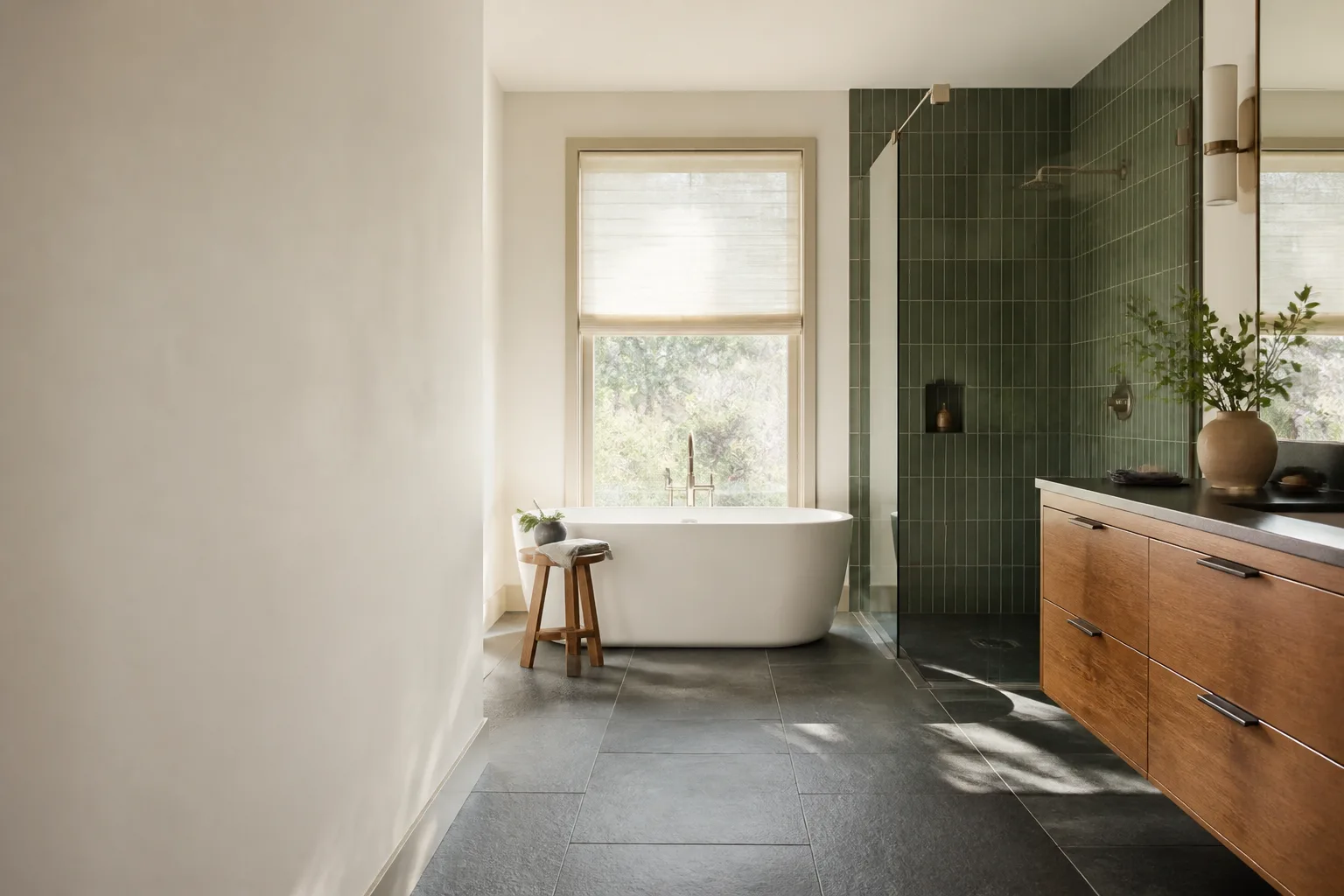
Unilock’s paver systems show up in bathrooms in two ways: as floor pavers in garden-level bathrooms, steam rooms, and wet-room conversions, and as veneer and accent walls around tubs and vanities. The product line is durable, but San Francisco’s climate does specific things to it. Fog-driven moisture and older home construction create a substrate problem that no paver can correct on its own. We’ll explain what fails first and what it costs to make it right.
Bradford Remodeling Co San Francisco is an independent remodeling contractor. We are not affiliated with Unilock, which means we stock and install their systems without a factory sales agenda. Our only job is telling you whether your bathroom needs a targeted repair or a full replacement, and giving you a price that holds.
Which Unilock Models This Applies To
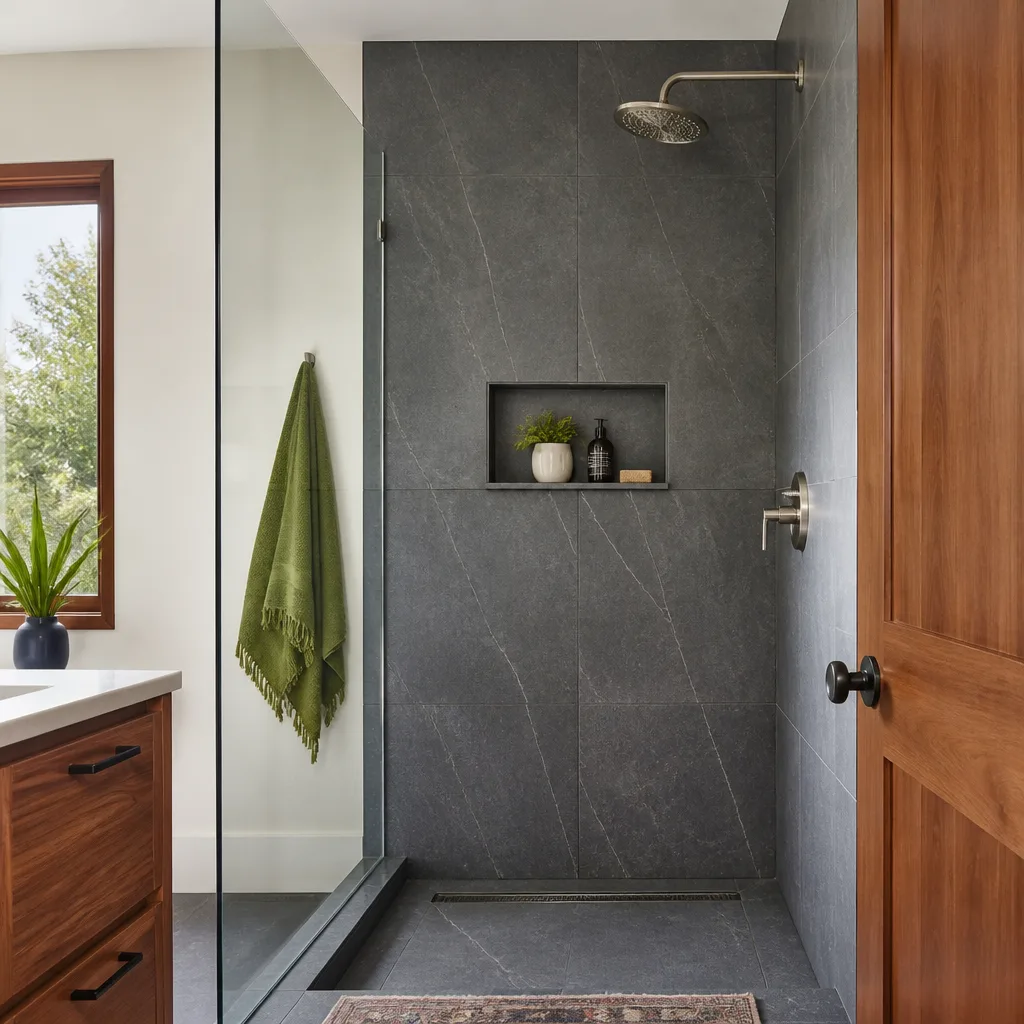
Unilock’s bathroom applications fall into three product groups. Rivenstone and Courtstone pavers appear most often on bathroom floors where homeowners want a stone look without the maintenance of true flagstone. Lineo dimensional stone shows up in steam rooms and wet areas. U-Cara multi-face wall panels are the product we see failing most frequently in San Francisco bathrooms, because the mechanical fastening system was never designed for constant humidity swings.
Identifying your exact model matters. The paver’s stamp or label sits on the back or bottom face, and the color code follows the product name (for example, a Rivenstone paver in Sierra color reads “Rivenstone SI”). Measure the paver’s thickness before calling anyone. Unilock bathroom pavers run 15 to 30 millimeters thick depending on series; that dimension determines whether the existing substrate can be reused or must be pulled and rebuilt.
On the OEM versus aftermarket question: Unilock does not sell direct to homeowners. We source OEM pavers and panels through authorized regional distributors for color-match accuracy. Aftermarket equivalents exist for simple edge pavers, but color matching across a bathroom floor is difficult, and we rarely recommend it. A slight shade difference reads as a repair job forever.
Styles & brands we work with







Signs Your Unilock Bathroom Remodeling Is Failing
- Pavers rock or shift when you step on them. This means the setting bed underneath has degraded. In San Francisco bathrooms, the usual cause is moisture migrating through an old mortar bed or an unsealed subfloor joint. The paver itself is rarely the problem; the substrate below it always is.
- Grout joints crumble or turn dark. Crumbling grout signals movement in the floor assembly. Dark grout signals trapped moisture. Both point to the same root issue: water has found a path under the pavers and the waterproofing membrane has failed or was never installed correctly.
- Efflorescence (white chalky film) reappears after cleaning. This is salt mineral residue carried up from the mortar bed by evaporating water. In San Francisco’s fog belt, bathrooms with poor ventilation show this within two years. It is always a moisture-management problem, not a paver defect.
- U-Cara wall panels bow or pull away from the wall. The mechanical clips that hold these panels expand and contract with humidity. After repeated cycles, the clips lose grip and panels start to float. This is a safety issue if a panel lets go above a tub or vanity area.
- A musty smell persists even after the exhaust fan runs. Water has reached the structural framing underneath the tile or paver floor. By the time you smell it, you are past surface repair. The floor assembly needs to come up and the subfloor inspected.
Replacement Cost & What’s Included

A full Unilock bathroom remodel in San Francisco lands between $10,620 and $33,040 installed. The spread is driven by bathroom size, substrate condition, and whether we’re replacing a floor only or a floor plus wall systems. Here’s how the budget breaks down:
- Demolition and disposal: $800 – $2,500 depending on access and dump fees
- Substrate rebuild and waterproofing: $2,000 – $6,500 (this is where San Francisco’s older homes cost more; fog-belt moisture means we often find rotted subfloor under failed pans)
- Unilock paver or panel materials: $3,500 – $12,000 depending on product line and square footage
- Setting labor, grout, sealant: $3,000 – $9,000
- Fixture setting and finish trim: $1,320 – $3,040
Every line is written before we start. You get a fixed price with no change orders unless you change the scope yourself. The 365-Day Done Right Promise covers the entire installation: if anything fails within a year, we return and correct it at no charge. The Unilock manufacturer warranty stays with you as a separate document, and we hand you both in writing at close-out.
See the difference
 Before
 After
After Before
 After
After Before
 After
AfterDIY or Call Us?
You can safely check a few things yourself: look for loose pavers by walking the floor barefoot, check grout joints with a fingernail, and run the exhaust fan for 30 minutes to see if the smell clears. Those observations help us diagnose faster when you call.
What you should not do is pull up pavers and re-set them yourself. If the substrate underneath is the problem, and in San Francisco bathrooms it usually is, re-setting pavers on a failed bed buys you three months before it fails again. Worse, if you have U-Cara wall panels pulling away, do not attempt to re-clip them. When a panel lets go it carries enough weight to crack a tub or injure someone below it. Let a crew with the right setting materials and a written guarantee handle it. Call (831) 610-5598 and we’ll schedule a walkthrough, diagnose the substrate, and give you a fixed written price.
Key Takeaways
- Full Unilock bathroom remodels in San Francisco run $10,620 – $33,040, priced in writing before work starts.
- Most Unilock bathroom failures are substrate and moisture problems, not paver defects.
- San Francisco’s fog-driven humidity makes waterproofing the critical line item in any bathroom floor replacement.
- We stock Unilock Rivenstone, Courtstone, Lineo, and U-Cara lines and can match by color code.
- The 365-Day Done Right Promise covers the entire installation for a full year in writing.
FAQs
A properly installed Unilock paver floor on a correct waterproofed substrate lasts 20 to 30 years before the surface needs work. The failure point in San Francisco bathrooms is almost never the paver; it’s the waterproofing membrane under it. Bradford Remodeling Co San Francisco installs with fog-belt moisture management in mind, and we put the guarantee in writing. Call (831) 610-5598 to have us inspect your floor assembly.
Yes, but only if the substrate is still solid and dry. If we find intact waterproofing and just a few loose pavers, we can re-set and re-grout for a fraction of a full remodel cost. If water has reached the subfloor, repair becomes replacement. That’s the diagnosis we make on the first visit, and it’s included in the free estimate.
Most Unilock bathroom remodels in San Francisco take 2 to 4 weeks from demolition to final sealant cure. The timeline depends on substrate condition and whether we’re replacing a floor only or floor plus wall systems. We give you a written schedule with the written price, and Curtis Lane reviews both with you before you sign anything.
We stock common Rivenstone and Courtstone sizes in neutral colorways for targeted repairs. For a specific color match, we order from our regional distributor and usually have material on site within 5 to 7 business days. We also stock compatible setting materials from the same manufacturers we use for Cambria, Silestone, and KraftMaid installations, so the substrate work stays within brand spec.
Written by Curtis Lane, Owner, Bradford Remodeling Co – San Francisco, CA at Bradford Remodeling Co San Francisco, serving San Francisco and nearby areas.


