







Free written scope consultation - allowances, timeline, and change-order rules on paper before a single trade is scheduled
Abodu Home Additions & ADU: The San Francisco Owner’s Guide
Abodu home additions and ADU work in San Francisco typically runs $53,100 to $153,400 installed, depending on foundation scope, utility rough-ins, and whether we’re matching an existing Abodu shell or doing a full ground-up build. Most owners call us when a site-built addition starts showing water intrusion at the roofline, when framing settles unevenly, or when an Abodu unit needs interior finishing that the original install left undone. We stock the common materials on our trucks, and we schedule a site walk within a few days so you get a written price before any work starts.
Bradford Remodeling Co San Francisco is an independent contractor. We’re not affiliated with Abodu, and we don’t pretend to be. What we do is fix, finish, and expand Abodu units and traditional home additions with the same by-the-book approach Curtis Lane has used across San Francisco for two decades.
Which Abodu Models This Applies To

Abodu’s current lineup includes three primary series: the Studio (roughly 340 square feet), the One-Bed (roughly 500 square feet), and the Two-Bed (roughly 610 square feet). The older Abodu D2 model, discontinued but still standing in backyards across the Sunset and Excelsior, runs slightly smaller at about 265 square feet. If you’re not sure which unit you have, check the metal compliance plate inside the door jamb or on the exterior wall near the utility connection. The serial number starts with the model code.
The compatibility gotcha most owners miss: Abodu shells arrive on-site as factory-built modules, but the foundation, utility tie-ins, and interior finish work happen locally. That means the parts that fail first are rarely Abodu-specific. They’re the site-built components: the ledger flashing where the module meets the foundation, the PEX stub-outs, the weather barrier at the marriage line, and the drywall seams that open up when the module settles. For those jobs, OEM versus aftermarket isn’t the real question. The real question is whether the product meets California code and whether the installer stands behind it. We use materials with manufacturer specs and warranties we can put in writing, including KraftMaid and Wellborn cabinetry, Cambria and Silestone surfaces, and Kohler and Moen fixtures when we’re finishing interiors.
Styles & brands we work with







Signs Your Abodu Home Additions & ADU Is Failing
- Water staining at the ceiling-roofline corner. This is usually a failed flashing detail where the factory module meets site-framed roof overhangs. In San Francisco’s fog belt, that seam gets hit with moisture 250-plus days a year, and even a small gap will wick water into the wall cavity.
- Doors that stick or bind. Modular units settle, especially on pier foundations in sandy Outer Sunset soil. A door that was square at install and now drags across the threshold tells you the unit has shifted and the frame needs re-shimming or the foundation needs attention.
- Drywall cracks running diagonally from window corners. This points to differential settlement between the module and the site-built foundation stem wall. You’ll see it most often in the first 18 months after install, and it won’t fix itself with paint.
- Musty smell near the floor perimeter. That’s moisture getting under the sill seal or through the marriage line. Left alone in San Francisco’s damp air, it becomes mold inside 30 days.
- Electrical outlets that trip intermittently. Some Abodu installs used undersized subpanels for the demand. If you’re running a space heater and a microwave and the breaker trips, the panel or the branch circuit needs upgrading by a licensed electrician.
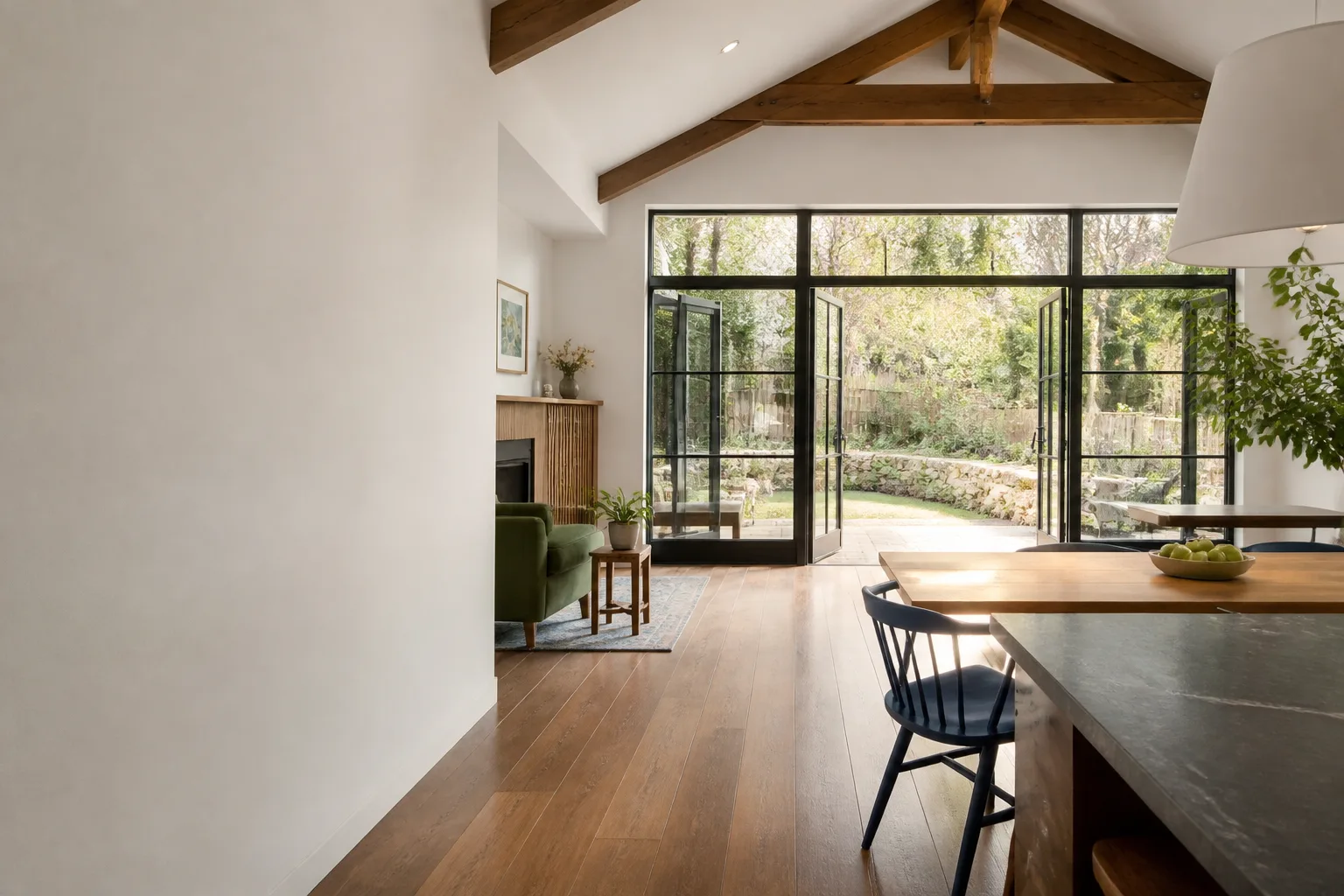
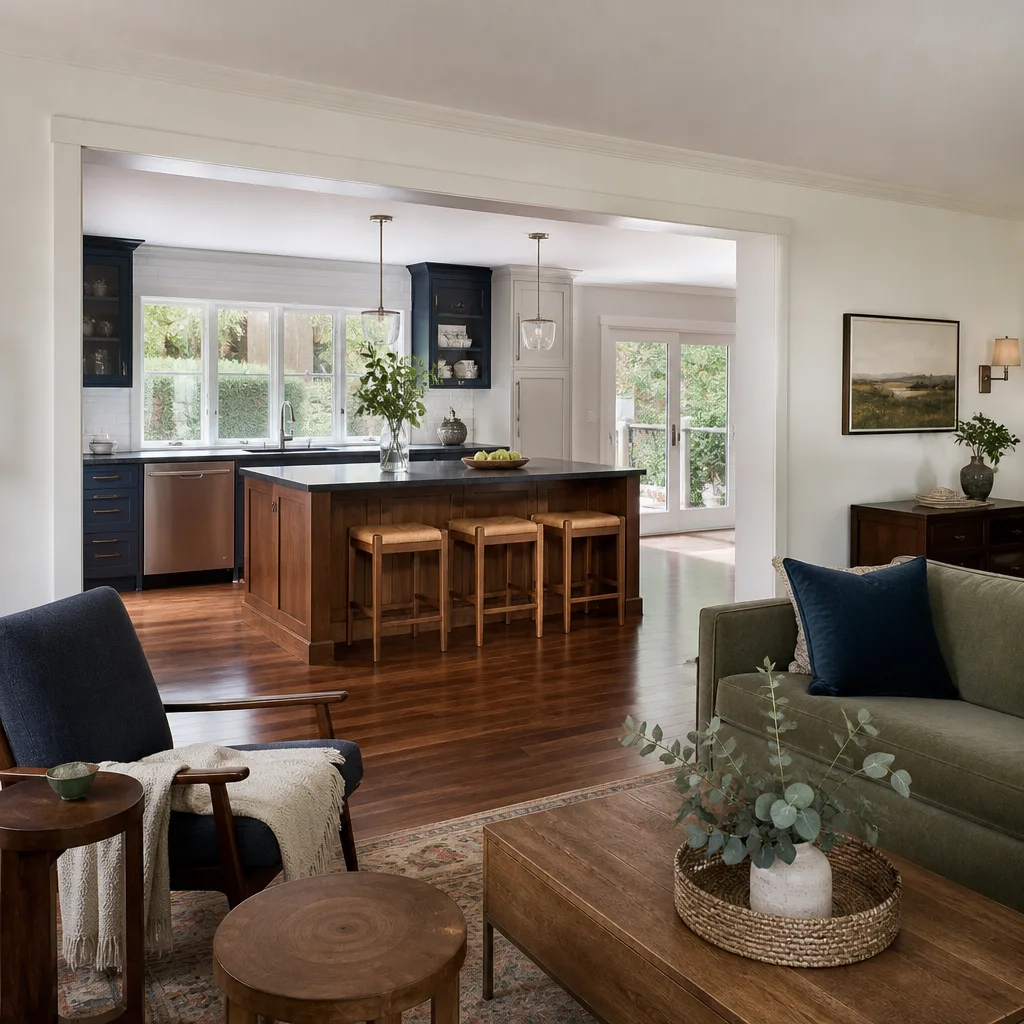
See the difference
 Before
 After
After Before
 After
After Before
 After
AfterReplacement Cost & What’s Included

Here’s how the numbers shake out in San Francisco for common Abodu-related repair and finish work:
| Scope | Typical Installed Range |
|---|---|
| Flashing repair and weather barrier at module-to-roof seam | $2,360 – $7,670 |
| Foundation leveling and re-shimming (pier pad repairs) | $5,310 – $14,160 |
| Interior finish-out (drywall, paint, trim, flooring) | $16,520 – $53,100 |
| Full ADU construction (ground-up, permitted) | $106,200 – $259,600 |
| Garage conversion to living space | $35,400 – $94,400 |
What drives the range is what’s hiding behind the first wall we open. A simple flashing repair is straightforward. A foundation correction means permits, engineering review, and shoring. Every price we give is written before work starts, and it doesn’t move at the door. The 365-Day Done Right Promise covers the completed work for a full year. If it fails inside that window, we come back and correct it at no charge.
DIY or Call Us?
You can check for visible gaps in flashing, caulk separation around windows, and standing water near the foundation. Those observations help us quote accurately over the phone. What you shouldn’t do is open up walls, attempt foundation leveling, or touch any electrical panel work. Foundation and structural corrections put the entire unit at risk if done wrong, and electrical work on a subpanel is a burn and fire hazard. Real talk: the money you save doing it yourself gets spent twice when we have to undo it. If you’re seeing any of the symptoms above, call (831) 610-5598 and we’ll send a background-checked, uniformed technician to take a look. The estimate is free, and you’ll have a written number before anything gets touched.
FAQs

A properly installed Abodu shell with correct flashing and foundation work will last 30 to 50 years before structural issues appear. The site-built components are what fail first. Flashing details in San Francisco’s coastal fog typically need replacement every 8 to 12 years, and caulk lines around windows and doors will need redoing every 3 to 5 years. Call (831) 610-5598 for an exact assessment of your unit.
Yes. In most cases the module shell itself is fine and the problem is in the connection points, finish work, or utility tie-ins. We repair those without touching the factory-built structure. If the shell itself has structural damage, we’ll tell you straight and give you a written price for either repair or replacement so you can make the call.
A flashing repair or re-shim job takes one to two days on site. Interior finish-out of an unfinished Abodu shell runs two to four weeks depending on scope. Permitted foundation corrections in San Francisco add two to six weeks to the timeline because of city inspections. We’ll give you a real schedule in writing before we start, and we hold to it.
We stock the common consumables: flashing, weather barrier, caulk, shims, drywall supplies, and standard electrical and plumbing rough-in parts. Abodu-specific modular components have to be sourced through the manufacturer or a compatible aftermarket supplier, which we handle for you with a written lead time. Call (831) 610-5598 and we’ll tell you what we have on the truck and what needs to be ordered.
Straight number, real scope, no surprises at close-out.
Written by Curtis Lane, Owner, Bradford Remodeling Co – San Francisco, CA at Bradford Remodeling Co San Francisco, serving San Francisco and nearby areas.


