








Free written scope consultation - allowances, timeline, and change-order rules on paper before a single trade is scheduled
James Hardie Kitchen Remodeling: The San Francisco Owner’s Guide
We install and remodel kitchens with James Hardie-compatible substrates and exterior cladding in San Francisco, with a full kitchen remodel typically running $16,520 to $53,100 installed. Most homeowners call us because they’ve opened a kitchen wall and found water-damaged drywall, rotted framing, or a failing exterior wall where kitchen moisture met the building envelope. The James Hardie part of the equation matters because San Francisco fog, salt air, and older balloon-frame construction put real stress on the materials that sit between your kitchen and the outside.
Bradford Remodeling Co San Francisco is an independent contractor, not affiliated with James Hardie. We install their products because the specs hold up here. Curtis Lane started reading structural drawings before he ever ran a paying job site, and he’ll tell you straight: the kitchen is where most San Francisco homes hide their real problems.
Which James Hardie Models This Applies To
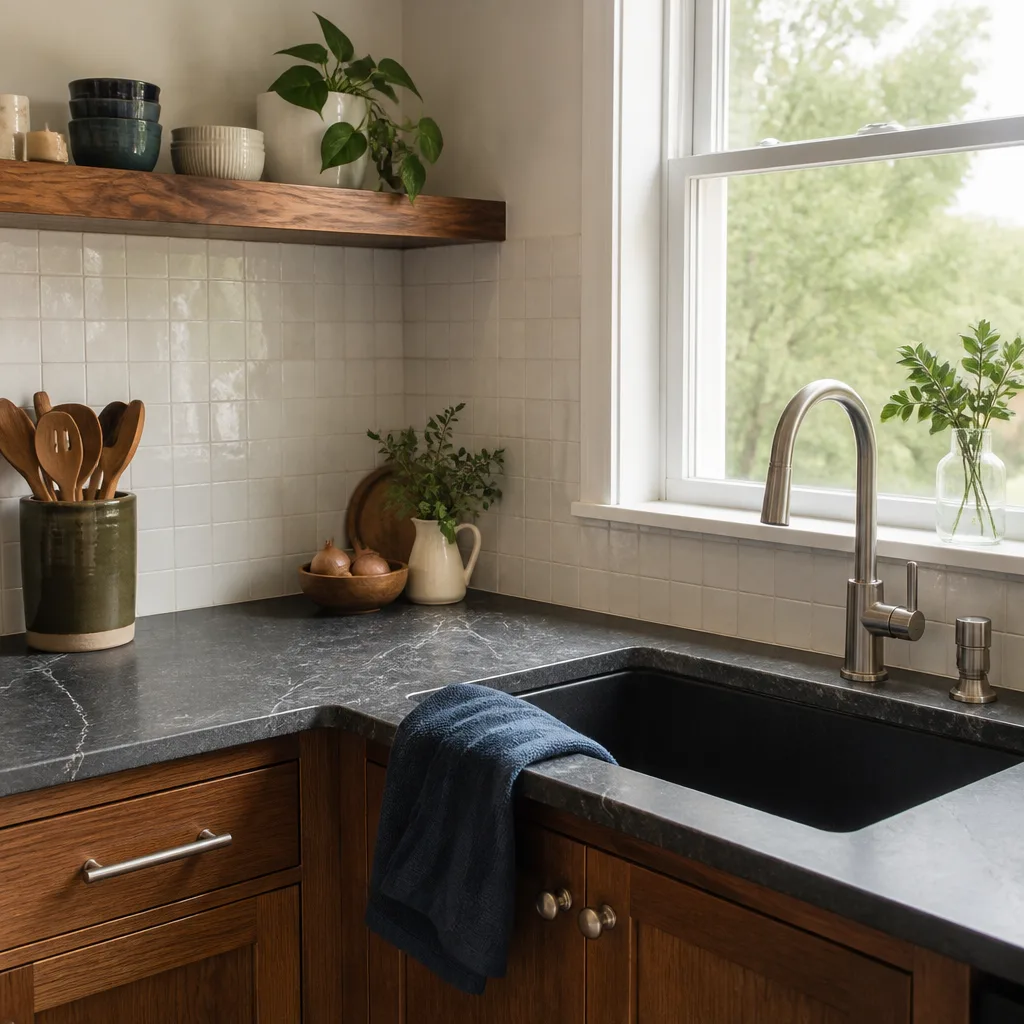
In a kitchen remodel context, James Hardie products show up in a few specific places: HardieBacker cement board behind tile backsplashes and countertops, HardiePanel vertical siding on exterior kitchen walls, and HardiePlank lap siding where the kitchen bumps out past the original footprint. If your San Francisco home has a breakfast nook or kitchen addition, there’s a good chance one of those products is already in the wall assembly.
The compatibility gotcha most people miss: HardieBacker comes in 1/4-inch and 1/2-inch thicknesses, and they are not interchangeable. The 1/2-inch board is for wall applications where you need structural continuity with adjacent drywall. The 1/4-inch board is for floors and countertops only. We’ve torn out failed tile jobs in the Outer Sunset where someone used 1/4-inch board on a wall, and the flex was enough to crack grout lines within two years. Check the board edge before anything gets tiled over it. If the thickness is already buried, we verify by removing a single tile and measuring the exposed substrate.
OEM versus aftermarket matters here mostly for warranty tracking. We use James Hardie cement board on Hardie-spec jobs because the manufacturer’s installation tolerances assume their board’s density and fastener schedule. A generic cement board can work structurally, but if you ever file a material claim, the manufacturer will ask what board was installed. We keep that answer simple.
Styles & brands we work with







Signs Your James Hardie Kitchen Remodeling Is Failing
- Grout cracking along the countertop-to-backsplash seam. This usually means the substrate behind the tile is flexing, and in San Francisco kitchens with older framing, that flex is often seasonal as humid air and fog shifts wood dimensions.
- Soft spots at the base of kitchen walls. Water travels down. If the exterior HardiePanel or HardiePlank seam failed at the bottom plate, moisture wicks into the framing and drywall above, and you’ll feel it before you see it.
- Tile popping off the wall behind the sink. Cement board holds tile mechanically when installed right. Loose tile there points to either the wrong board thickness or missing fasteners at the seam lines.
- Visible gaps at exterior corner trim near the kitchen. HardiePlank and HardiePanel expand and contract with temperature. If the install didn’t leave proper clearance at trim joints, the boards will push and open the corner, which is how fog-driven moisture starts moving into the wall cavity.
- A persistent musty smell in the kitchen that never fully clears. That’s moisture trapped in the wall assembly. By the time it smells, the cavity has likely been wet for months, and the fix almost always involves opening the drywall to inspect the substrate and framing.
See the difference
 Before
 After
After Before
 After
After Before
 After
AfterReplacement Cost & What’s Included

A full James Hardie-compatible kitchen remodel in San Francisco runs $16,520 to $53,100. That spread accounts for kitchen size, cabinet grade, countertop material, and whether we’re rebuilding the exterior wall assembly or just working inside. A small galley kitchen in the Richmond District sits at the low end. A full gut with an island, new HardiePanel exterior sheathing, and custom cabinetry in Pacific Heights lands at the top.
Here’s how the line items break down for the scope we see most often:
- Full kitchen remodel: $16,520 – $53,100
- Small kitchen remodel: $10,620 – $23,600
- Cabinet installation: $4,720 – $15,340
- Countertop installation: $2,360 – $7,670
- Backsplash installation: $945 – $2,950
- Kitchen island installation: $3,540 – $11,800
Every one of those numbers includes parts and labor, and the written price you get before we start is the price you pay at close-out. The Garrison Standard says every number goes in writing before a tool comes out. That’s not a preference. It’s how we’ve operated since 2004. The 365-Day Done Right Promise covers the completed work for a full year after we finish. If something fails inside that window, we return and correct it at no charge.
DIY or Call Us?
You can safely check a few things yourself. Look at exposed HardieBacker edges if any tile is already off. Measure the board thickness. Check the caulk lines at the countertop-to-backsplash seam and at exterior trim near the kitchen. That information helps you know what you’re dealing with before anyone gives you a number.
What you should not do is tear into a wet kitchen wall without control. If there’s a moisture source, the longer the cavity stays open and wet, the more framing gets damaged. San Francisco fog means external wall moisture doesn’t dry fast, and opening a wall you’re not ready to close just gives the problem more time to spread. If you’re on the fence, call (831) 610-5598 and describe what you’re seeing. We’ll give you a straight read on whether it’s urgent or scheduled work. Straight number, real scope, no surprises at close-out.
FAQs
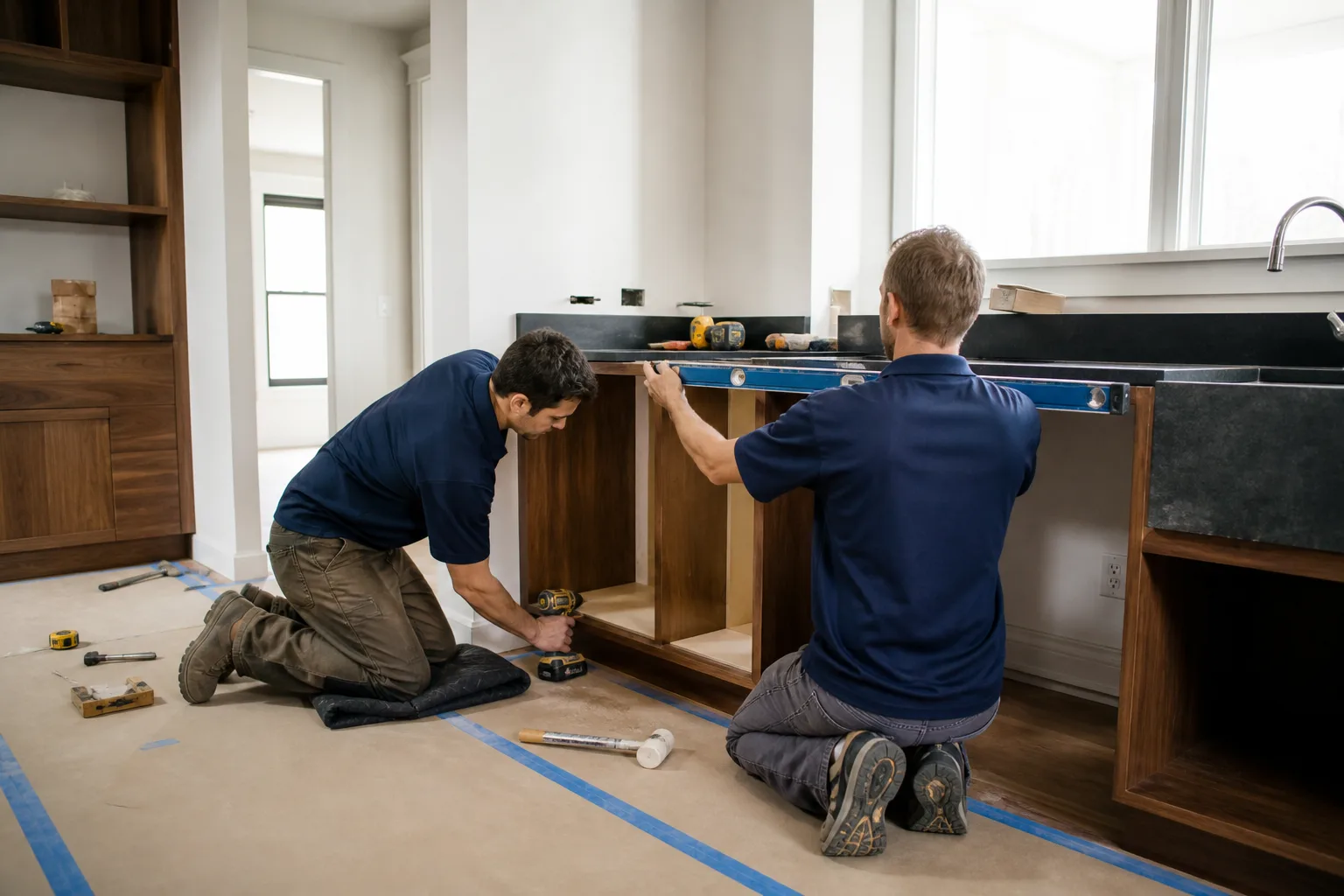
A properly installed James Hardie substrate and exterior assembly should last 25 to 30 years in San Francisco’s climate, with the tile surface and fixtures typically needing cosmetic replacement sooner. The wall assembly is the long-term investment. Call (831) 610-5598 if you want an exact scope for your kitchen.
Yes, if the damage is contained to one wall section or substrate area, we can replace that portion and retile without a full kitchen remodel. The honest caveat is that water damage behind a wall often runs further than what’s visible, and we won’t know the repair boundary until the drywall is open. Call (831) 610-5598 for an inspection-based estimate.
A full kitchen remodel with new substrate and exterior wall repair takes three to six weeks depending on cabinet lead times and the condition of the framing behind the walls. We give you a written timeline as part of the written scope, and the schedule doesn’t shift without a conversation first.
We keep HardieBacker 1/4-inch and 1/2-inch cement board on hand for San Francisco kitchen jobs, and we order HardiePanel and HardiePlank to spec for each project from our regular supplier. We also work with KraftMaid and Wellborn cabinetry, Cambria and Silestone surfaces, and Kohler and Moen fixtures, so the kitchen order comes through as one coordinated scope.
Written by Curtis Lane, Owner, Bradford Remodeling Co – San Francisco, CA at Bradford Remodeling Co San Francisco, serving San Francisco and nearby areas.


