






Free written scope consultation - allowances, timeline, and change-order rules on paper before a single trade is scheduled
James Hardie Bathroom Remodeling: The San Francisco Owner’s Guide
A James Hardie bathroom remodel in San Francisco typically runs $10,620 to $33,040 installed, depending on whether we’re replacing fiber cement backer board behind a failing shower or rebuilding the entire wet area substrate and surround. Most readers land here because they’ve pulled up a loose tile, found swelling or crumbling sheetrock behind it, or noticed grout lines that won’t stay sealed no matter how many times they recaulk. The root cause is almost always the same: moisture got behind the surface because the substrate, the layer that actually holds the tile and bears the water load, was never specced for a San Francisco bathroom’s humidity cycle. We stock James Hardie HardieBacker and other fiber cement panels on the truck, and we install them with the correct fastener schedule and seam treatment every time.
Which James Hardie Models This Applies To

James Hardie makes two fiber cement backer boards we regularly install in San Francisco bathrooms: HardieBacker 1/4″ and HardieBacker 1/2″. The 1/2″ board goes on walls and carries the tile load; the 1/4″ board is for floors and countertops. Here’s the compatibility gotcha most homeowners don’t know: HardieBacker 1/4″ is not rated for wall use, and installing it behind shower tile is a common mistake that voids the manufacturer’s spec and shortens the install’s life. The boards also come in two thicknesses marked on the panel face, so you can confirm what’s behind your existing tile before you demo. For a San Francisco bathroom, we also stock HydroDefense, Hardie’s waterproof board with a built-in moisture barrier, because the fog-driven humidity in neighborhoods like the Outer Sunset and the Richmond eats through untreated cement board faster than any other climate factor in the city.
The OEM-versus-aftermarket decision for James Hardie comes down to warranty and material consistency. OEM panels carry the manufacturer’s 10-year limited warranty when installed per Hardie’s written instructions. Aftermarket fiber cement boards from other makers can work, but the density and fastener-holding characteristics differ enough that we don’t mix brands on a single wall. When Curtis Lane specs a bathroom, the materials list names the exact Hardie product, thickness, and fastener schedule, so there’s no guesswork for the crew and no surprise substitutions for the homeowner.
Styles & brands we work with







Signs Your James Hardie Bathroom Remodeling Is Failing
- Loose or hollow-sounding tiles. This usually means the thinset bond to the backer board has broken down, often because the board wasn’t fastened with the correct corrosion-resistant screws on the required 8-inch spacing. Water gets behind the tile, and the tile starts moving.
- Persistent mildew smell you can’t source. That smell is moisture trapped in the substrate or framing behind the cement board. In San Francisco’s cool, damp air, a small leak behind a shower wall can stay wet for months before you see a stain.
- Grout cracking along the wall-to-floor transition. Movement at that joint means the substrate is flexing. Cement board isn’t the problem; the framing behind it is shifting, and the grout is the first place the movement shows.
- Efflorescence, that white chalky powder on grout or tile edges. That’s mineral salts being pushed out of the cement board or mortar by water moving through the assembly. It tells you water is getting in and evaporating, and it means the waterproofing layer has failed or was never installed.
- Soft or swollen baseboard at the shower curb. Floor-level water wicking up the base of the wall means the pan or the bottom edge of the backer board isn’t sealed. In San Francisco bathrooms, this is the most common failure we see, because older homes settle and pans crack.
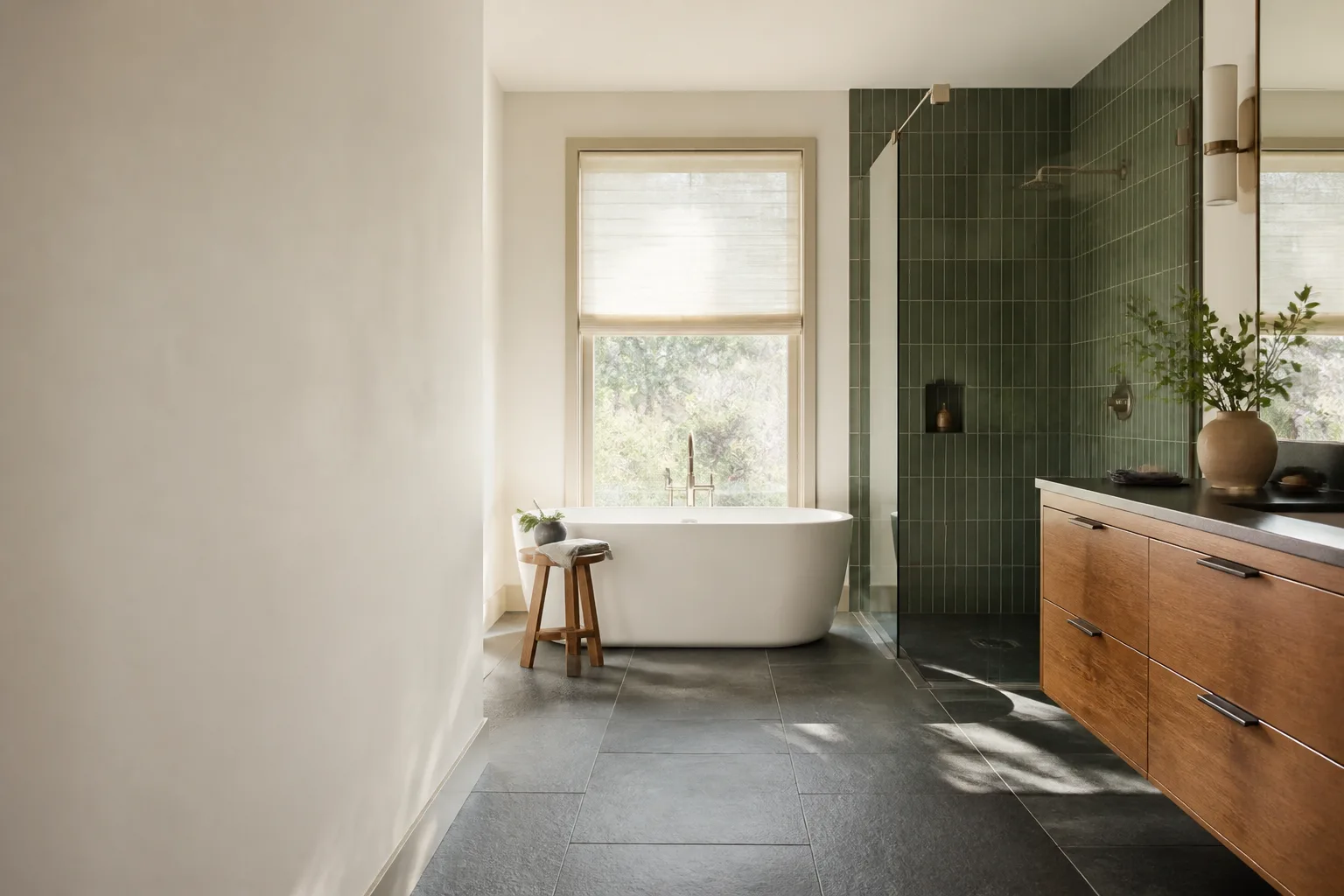
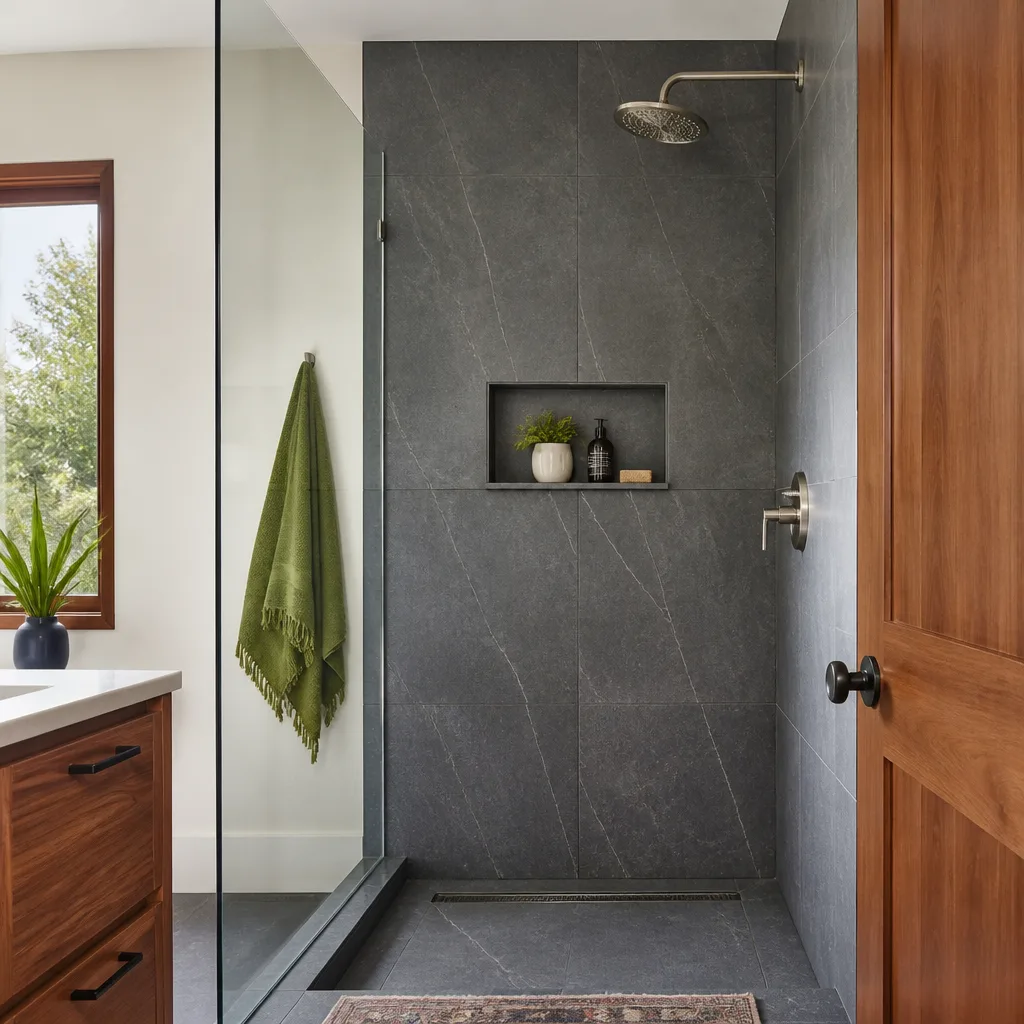
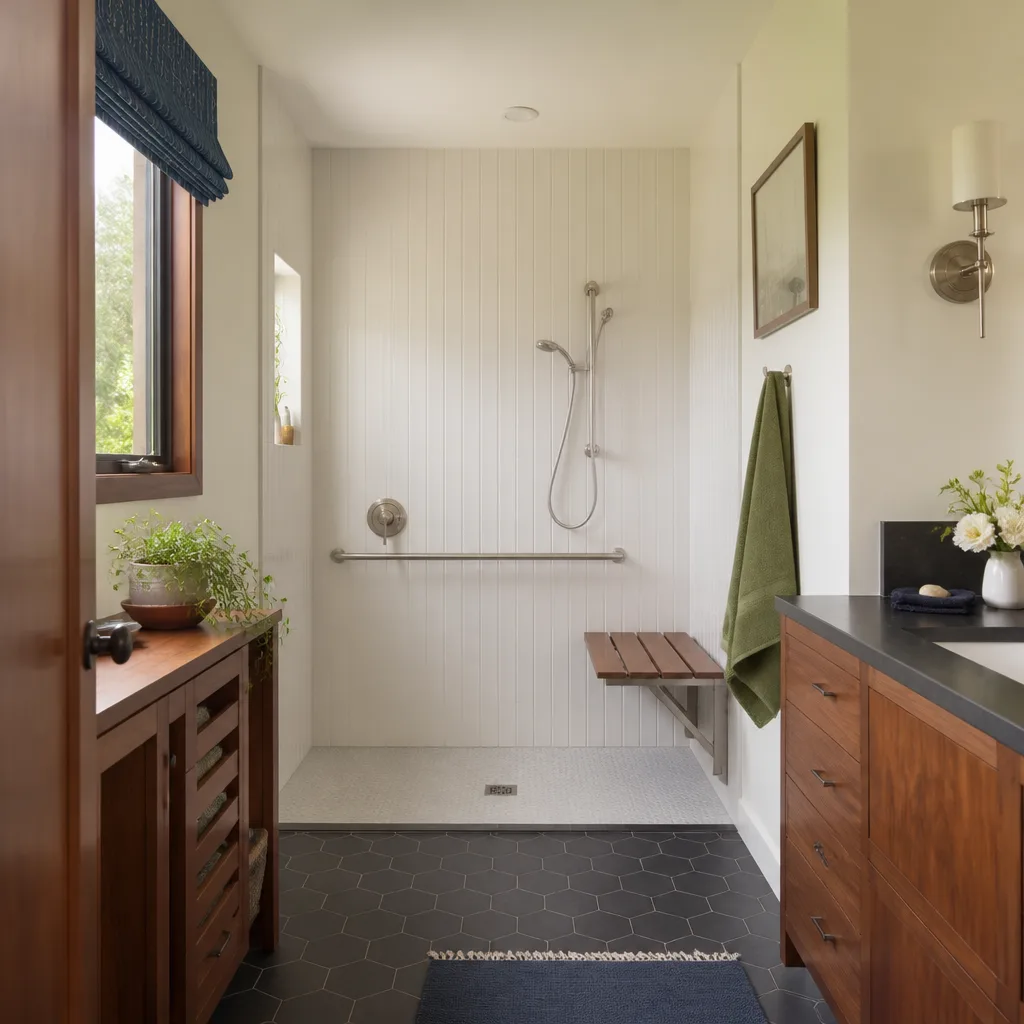
See the difference
 Before
 After
After Before
 After
After Before
 After
AfterReplacement Cost & What’s Included
For a full James Hardie bathroom remodel in San Francisco, installed pricing runs $10,620 to $33,040. The spread comes down to scope. A focused re-board of a shower surround with new tile and fixtures lands near the bottom. A full gut to the studs, new HardieBacker on all wet walls, a new pan, new plumbing rough-in, and finished tile work pushes toward the top. Every Bradford Remodeling Co San Francisco quote is a written, line-item price before any work starts, and that number doesn’t move at the door. The quote always includes demolition, disposal, substrate replacement, waterproofing, tile-setting materials, labor, and the manufacturer-spec fastener and seam treatments. You’ll also get a signed copy of the 365-Day Done Right Promise at close-out.
DIY or Call Us?
You can safely check a few things: look at the panel markings behind any loose tile to confirm which HardieBacker thickness you have, note whether you see a waterproofing layer behind the board, and photograph everything before you cover it back up. What you shouldn’t do is cut into a shower wall without knowing what’s behind it. In San Francisco, older balloon-frame construction in neighborhoods like the Outer Sunset and Noe Valley often hides knob-and-tube wiring or plumbing lines running horizontally through stud cavities. A wrong cut with a reciprocating saw turns a $4,000 shower re-board into a five-figure electrical or plumbing repair. If your James Hardie substrate has failed, call (831) 610-5598. We’ll send a background-checked, uniformed technician to measure, document, and give you a straight replacement price.
FAQs

A correctly installed James Hardie substrate with a proper waterproofing layer should last the life of the bathroom, which in San Francisco means 20 to 30 years before the next remodel. The failure point is almost never the fiber cement board itself; it’s the waterproofing seam treatment or the pan connection. When we install HardieBacker, we tape and fill every seam with the manufacturer-specified alkali-resistant mesh tape and thin-set, then apply a full-surface liquid or sheet waterproofing membrane. That combination is what carries the 365-Day Done Right Promise and what keeps moisture out of the stud cavities. Call (831) 610-5598 for a free estimate on your specific bathroom.
If the damage is isolated to one panel and the surrounding substrate is sound, we can cut out and replace just that section, retape, and reseal the seams. This runs toward the bottom of the $10,620 to $33,040 range and takes one to two days. If multiple panels show water damage or the framing behind them is soft, patching would just hide the problem. We’ll tell you which situation you have, and we’ll put the repair scope and price in writing before any work starts. Call (831) 610-5598 and we’ll schedule a look.
A shower surround re-board with new tile typically takes three to five working days. A full bathroom gut with new substrate, pan, and finishes takes two to three weeks. San Francisco’s older homes sometimes add a day or two for framing corrections, because we won’t install new cement board over studs that aren’t straight and dry. We’ll give you the timeline in writing with your quote, and we’ll stick to it. Call (831) 610-5598 and we’ll walk you through the schedule.
We stock HardieBacker 1/2″, HardieBacker 1/4″, and HydroDefense panels on the truck, along with the manufacturer-specified screws, mesh tape, and thin-set. For full bathroom remodels, we also stock KraftMaid cabinetry, Cambria and Silestone surfaces for vanities, and Kohler and Moen fixtures so the finished bathroom carries documented brand warranties alongside our own. No waiting on a supplier for the core substrate. Call (831) 610-5598 and we’ll confirm what’s on the truck for your job.
Written by Curtis Lane, Owner, Bradford Remodeling Co – San Francisco, CA at Bradford Remodeling Co San Francisco, serving San Francisco and nearby areas.


