






Free written scope consultation - allowances, timeline, and change-order rules on paper before a single trade is scheduled
IKO Home Additions & ADU: The San Francisco Owner’s Guide
If you’re planning an IKO-integrated home addition or ADU in San Francisco, you’re looking at a typical installed range of $53,100 to $153,400, depending on square footage, foundation work, and how much of the existing IKO roofing and wall assembly we’re tying into. Most homeowners discover they need specialized help when the addition’s roofline meets the original IKO shingle system and the flashing detail wasn’t spec’d correctly from day one. That intersection is where water finds its way in, and it’s the first thing we inspect on any San Francisco addition or ADU call.
We’re not affiliated with IKO. What we are is a San Francisco remodeling contractor that works around IKO roofing and building envelope products on a regular basis, which means we know exactly how their shingle profiles, underlayment specs, and ventilation requirements interact with new framing.
Key Takeaways:
- Home additions and ADUs in San Francisco run $53,100 to $153,400 installed.
- IKO compatibility hinges on flashing details at the roof intersection, not just matching shingle color.
- San Francisco’s fog belt shortens the lifespan of poorly tied-in addition roofing, so the connection detail matters more than the shingle itself.
- Every Bradford Remodeling Co San Francisco project gets a written price before work starts and a 365-Day Done Right Promise in writing at close-out.
Which IKO Models This Applies To

We work with the full IKO residential line you’re likely to find on San Francisco homes: Cambridge, Dynasty, Nordic, and Royal Estate shingles, plus IKO’s StormShield underlayments and their roof ventilation products. When we’re tying a new addition or ADU into an existing IKO roof, the compatibility question isn’t just the shingle model. It’s the substrate condition, the existing underlayment type, and whether the original roof was installed with IKO’s full system or just their shingles over whatever felt was cheapest at the time.
Here’s the gotcha most San Francisco homeowners run into: IKO shingles installed over the wrong underlayment void the manufacturer’s wind warranty, but more importantly, they trap moisture differently than IKO’s spec’d system. In neighborhoods like the Outer Sunset and Richmond District, where fog sits on roofs for hours every morning, that trapped moisture works its way into the addition’s framing faster than you’d expect. When we add on, we document what’s there and specify the tie-in accordingly. Curtis Lane has torn into enough Outer Sunset balloon-frame walls to know that older San Francisco construction never matches the plan you drew on paper.
OEM versus aftermarket matters less for the roof than it does for the framing connectors and flashing. We use manufacturer-specified flashing profiles, but the real decision is the substrate and venting. A cheap aftermarket ridge vent that doesn’t match IKO’s airflow spec will cook the underside of those shingles in a San Francisco summer heat wave and you won’t see the damage for two seasons.
Styles & brands we work with







Signs Your IKO Home Additions & ADU Is Failing
- Water staining at the addition’s interior ceiling corner. This almost always traces back to the flashing at the roof tie-in. The original IKO shingles may be fine, but the transition where new framing meets old roof is the weak point.
- Granule loss on the addition’s roof slope only. If the original house roof looks fine but the addition roof is shedding granules, the addition’s ventilation was likely underspecified. Trapped heat breaks down IKO shingles from underneath.
- Musty smell in the ADU after foggy mornings. San Francisco’s fog finds every unsealed penetration. If the ADU smells damp only on fog days, you have a flashing gap somewhere in the roof-to-wall connection.
- Visible sag in the addition’s roofline where it meets the original structure. This is a framing issue, not a shingle issue. It means the load wasn’t transferred correctly at the tie-in point, and it needs structural attention before any roofing work.
- Ice dam formation on the addition’s roof edge, but not the main house. In San Francisco’s microclimates, the addition’s insulation or venting was likely shorted. That differential snowmelt pattern is a ventilation failure, and it eats IKO shingles from the edge inward.
See the difference
 Before
 After
After Before
 After
After Before
 After
AfterReplacement Cost & What’s Included
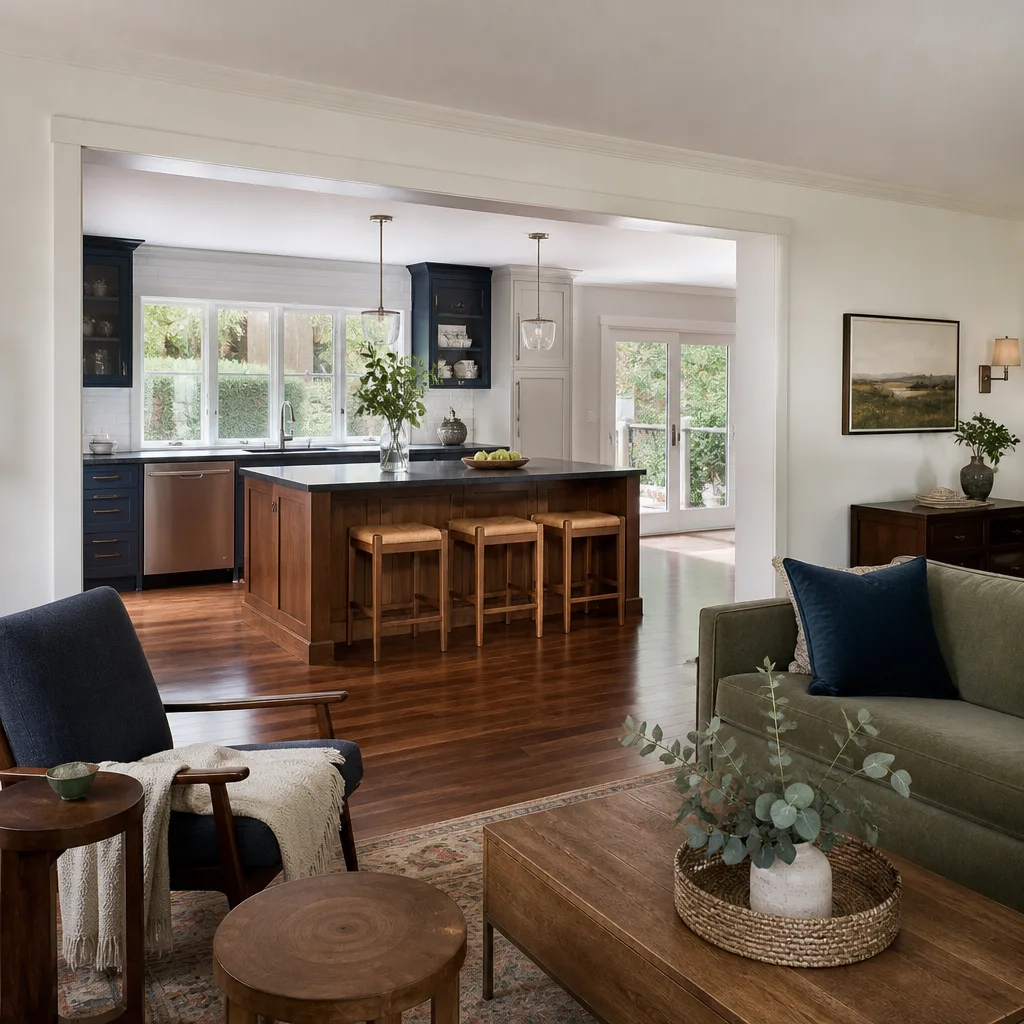
In San Francisco, a full home addition runs $53,100 to $153,400. An ADU construction project lands between $106,200 and $259,600. A garage conversion, which often involves IKO roofing tie-ins on a smaller scale, runs $35,400 to $94,400. The range on additions comes down to square footage, whether you’re on a slab or need foundation work, and how much structural retrofit the existing IKO roof connection requires.
Here’s what changes the number most: if the existing IKO roof is newer and the underlayment was done to spec, the tie-in is straightforward and we’re mainly paying for framing, electrical rough-in, and roofing labor. If the existing roof is older and we have to strip back several courses of shingles to establish a clean flashing line, that adds labor hours and material. Every Bradford Remodeling Co San Francisco project includes a written line-item price before any work starts, and the 365-Day Done Right Promise means that if the addition’s roof connection fails within a year, we come back and correct it at no charge. You’ll have that guarantee in your hand, signed, at close-out.
DIY or Call Us?
If you’re comfortable on a ladder and want to understand the problem before calling anyone, you can safely check a few things: look at the flashing line where the addition roof meets the original structure, check for visible granule loss on the addition slope, and note whether the ADU smells damp specifically on fog days. That information helps us quote accurately over the phone.
What you should not do is get up on the addition’s roof and start pulling shingles to investigate, especially on a two-story San Francisco home where the roof pitch plus fog-slick surfaces make for a genuinely dangerous work environment. Roof work on a tied-in addition means understanding load transfer, flashing sequencing, and IKO’s installation spec, and getting any of those wrong means the water comes back in six months. Call (831) 610-5598 and we’ll send a crew that knows the difference between a shingle problem and a structural problem. Straight number, real scope, no surprises at close-out.
FAQs

An IKO architectural shingle roof, installed to spec with proper ventilation, should last 20 to 30 years on a San Francisco addition. In fog-heavy neighborhoods like the Sunset, expect the lower end of that range if the venting was underspecified, and the upper end if we’re installing the full IKO system from deck to ridge.
Yes, in most cases we can tie into an existing IKO roof without replacing it, provided the underlayment is still sound and the shingles have enough service life left to justify the connection. We’ll tell you honestly if the existing roof is too far gone to warrant tying into, and the estimate reflects that before any work starts.
A standard home addition in San Francisco runs 4 to 8 months from permit approval to final inspection. ADU construction typically runs 6 to 12 months. The permitting phase adds time on top of that, and San Francisco’s Department of Building Inspection has its own calendar. Curtis Lane keeps a copy of the California Building Code on his desk and has read enough of it to know exactly which inspections will slow you down.
We don’t stock IKO shingles on a warehouse shelf, but we order IKO materials directly for every addition project and we maintain relationships with San Francisco suppliers who carry the full IKO line. For the parts that fail most often on additions, flashing profiles and ridge vents, we keep the common profiles on hand so a warranty follow-up doesn’t wait on a parts order.
If you’re planning an IKO home addition or ADU in San Francisco, call (831) 610-5598 for a free estimate. We’ll give you a written price, a real scope, and a signed 365-Day Done Right Promise before we put a single tool on site.
Written by Curtis Lane, Owner, Bradford Remodeling Co – San Francisco, CA at Bradford Remodeling Co San Francisco, serving San Francisco and nearby areas.


